












 800.503.7604
Understanding Painful Urination (Dysuria)

Burning with urination is a painful symptom that affects millions of people every year, and if you're experiencing it right now, you want relief fast.
Quick Answer: Common Causes & Relief Options
| Primary Causes | Quick Relief Steps |
|---|---|
| Urinary Tract Infections (UTIs) | See a doctor for antibiotics; drink plenty of water |
| Sexually Transmitted Infections (STIs) | Get tested and treated promptly |
| Vaginal Infections (yeast, bacterial) | Antifungal or antibiotic treatment |
| Chemical Irritants (soaps, douches) | Stop using irritating products; rinse with plain water |
| Kidney or Bladder Stones | Hydrate well; seek medical evaluation |
| Prostate Infections (men) | Medical treatment with antibiotics |
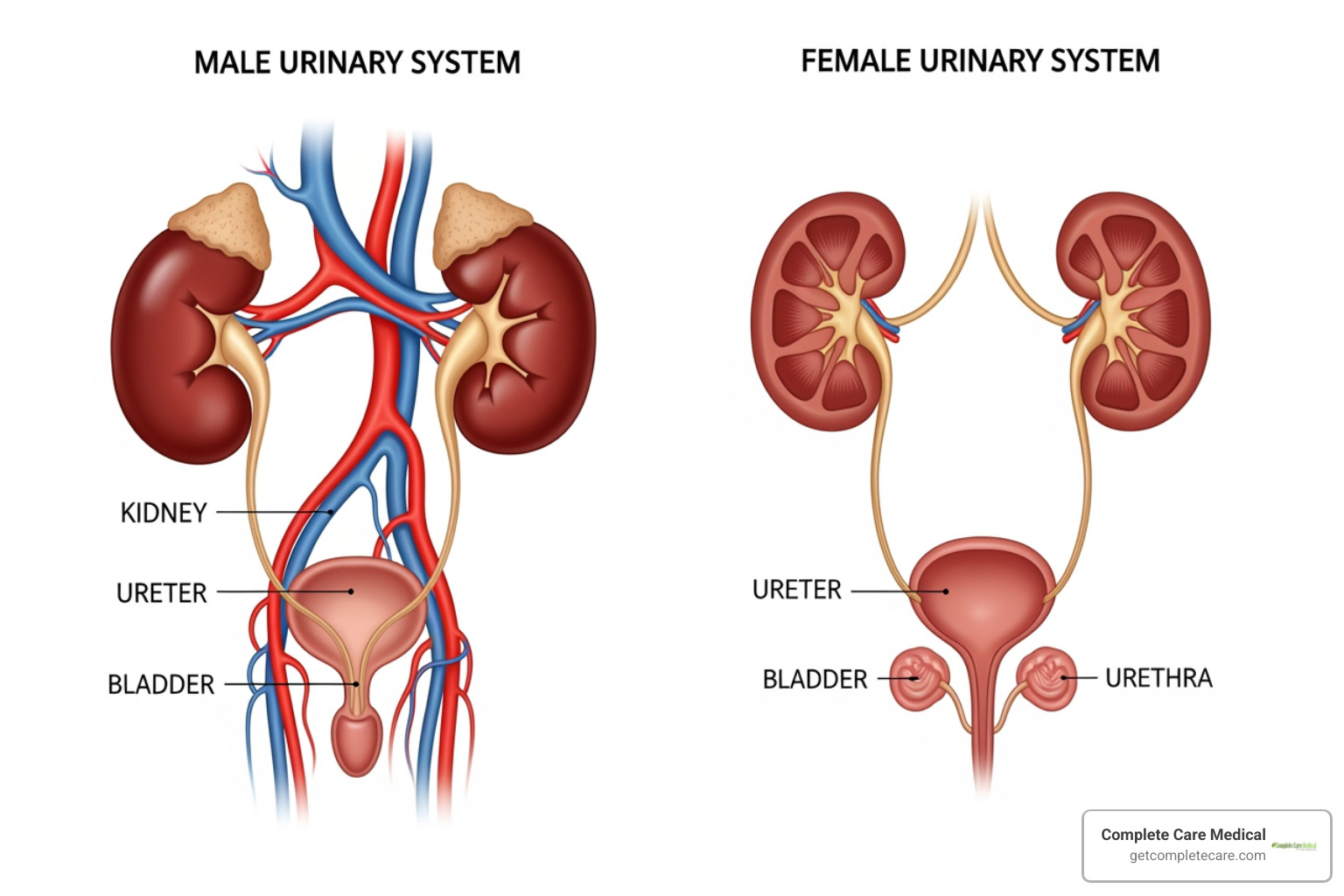
The medical term for this is dysuria, a symptom, not a disease, that signals a problem in your urinary tract. The pain can feel like burning, stinging, or itching. While it affects both genders, women are more susceptible due to their shorter urethra, which allows bacteria easier access to the bladder. In fact, urinary tract infections (UTIs), the most common cause of burning with urination, will affect about 60% of women and 12% of men in their lifetime.
The good news is that most causes are highly treatable. Identifying the root problem is the key to finding effective relief.
At Complete Care Medical, we've seen how crucial education and support are for the thousands we've helped with urological conditions since 2004. Understanding the causes of burning with urination is the first step toward finding relief and preventing future issues.
Why It Burns: Common Causes of Burning with Urination
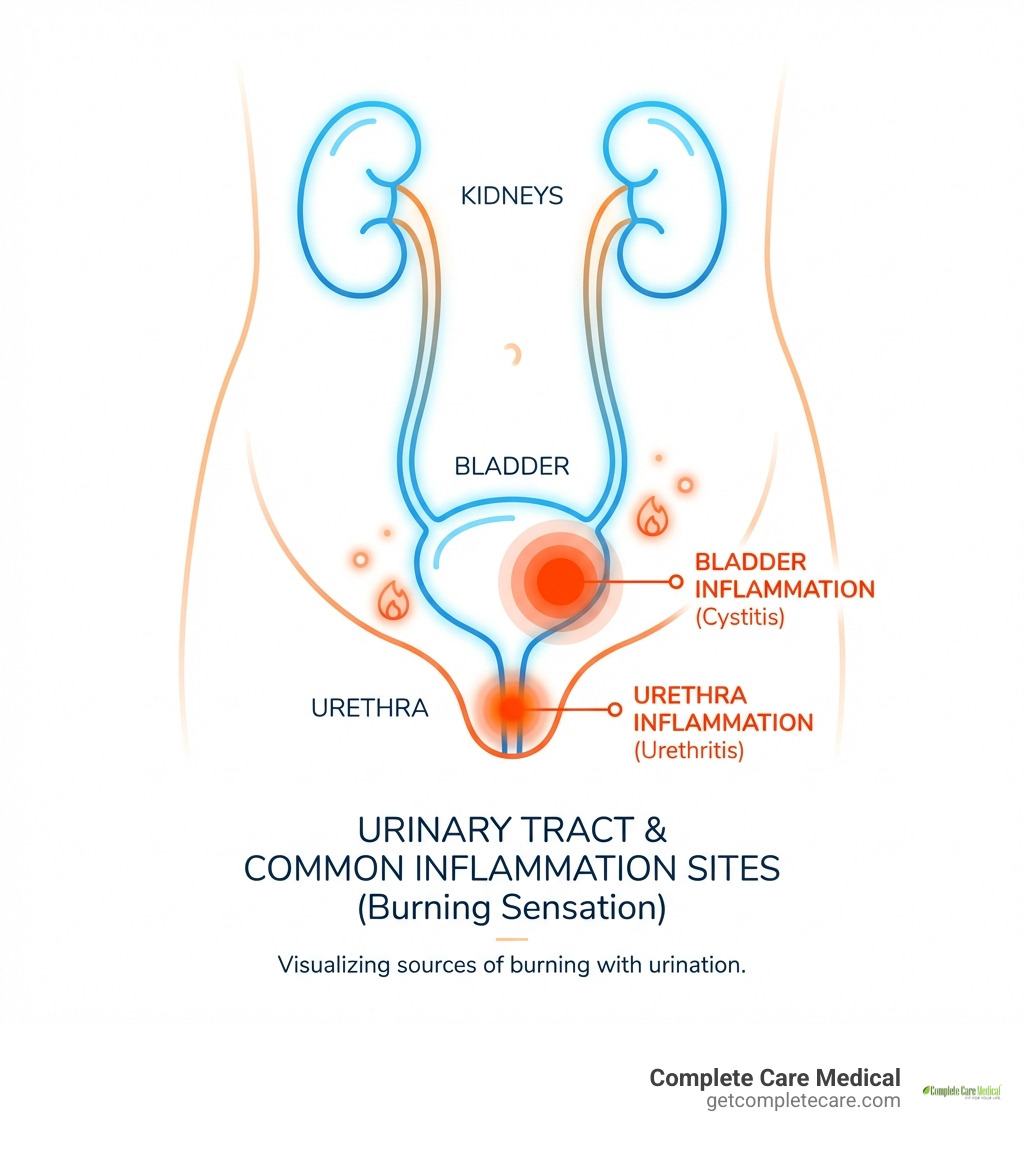
The burning sensation during urination, or dysuria, signals inflammation somewhere in your urinary tract. While infections are the most common culprit, the cause can also be irritation or an underlying medical condition. Factors like gender, age, and health history influence your risk.

Urinary Tract Infections (UTIs): The Leading Cause
UTIs are by far the most frequent reason for burning with urination. They occur when bacteria like E. coli enter the urinary tract and multiply, causing inflammation in the bladder (cystitis) or urethra (urethritis). UTIs lead to 8.1 million health care visits annually, and about 60% of women will have at least one in their lifetime.
Besides burning, UTI symptoms often include:
- A strong, persistent urge to urinate
- Frequent, small amounts of urine
- Cloudy, dark, or strong-smelling urine
- Pelvic or lower abdominal pain
Prompt treatment is crucial, as an untreated UTI can spread to the kidneys (pyelonephritis), causing fever, back pain, and nausea. In rare cases, it can lead to sepsis, a life-threatening condition. For more prevention tips, you can read our tips for preventing UTIs.
Other Infections That Cause Painful Urination
While UTIs are common, other infections can also cause dysuria.
Sexually Transmitted Infections (STIs): Common STIs like chlamydia and gonorrhea can inflame the urethra, causing burning, discharge, and pelvic pain. Genital herpes and trichomoniasis are other culprits. Prompt testing and treatment are essential to avoid long-term complications like infertility.
Vaginal Infections: In women, yeast infections (caused by Candida overgrowth) and bacterial vaginosis (BV) can cause external irritation and burning during urination, along with itching and abnormal discharge.
Prostatitis in Men: Inflammation of the prostate gland (prostatitis) in men can cause burning with urination, groin pain, and difficulty urinating. It can be caused by a bacterial infection or other factors. You can learn about painful urination causes in men.
Non-Infectious Irritants and Conditions
Sometimes, the cause isn't an infection. These non-infectious issues can be just as uncomfortable:
Kidney and Bladder Stones: Hard mineral deposits that cause sharp pain and severe burning with urination as they pass through the urinary tract.
Interstitial Cystitis (IC): A chronic condition causing bladder pain and pressure that mimics a UTI, but with no infection present.
Chemical Irritants: The urethra can be irritated by harsh soaps, douches, spermicides, scented toilet paper, or certain laundry detergents.
Hormonal Changes: During menopause, lower estrogen levels can lead to vaginal atrophy, making tissues thinner, drier, and more prone to irritation and burning with urination.
Urethral Stricture: A narrowing of the urethra from injury or infection that restricts urine flow and causes pain.
Pelvic Radiation Therapy: A potential side effect of cancer treatment that can cause inflammation of the urinary tract.
Diabetes: This condition can affect nerves and the immune system, increasing susceptibility to UTIs and other urinary problems. Learn more about diabetic bladder problems.
Bladder Cancer: Though rare, burning with urination can be an early symptom. It's important not to ignore persistent urinary changes.
How to Find Relief and Prevent Future Discomfort
Relief is available, but it starts with a proper diagnosis from a healthcare provider to guide treatment and prevention.
Getting a Diagnosis: When to See a Doctor
While mild irritation may resolve on its own, it's best to see a doctor for persistent burning with urination. A timely diagnosis prevents complications.
Seek medical care immediately if you have:
- Severe pain or pain that doesn't improve in 24 hours
- Fever, chills, or back/side pain (signs of a kidney infection)
- Blood in your urine or semen
- Unusual penile or vaginal discharge
- Any burning symptoms during pregnancy
What to expect at the doctor's office: Your provider will review your medical history and may perform a physical exam. A urine sample is the primary diagnostic tool, used for:
- Urinalysis: A quick test for abnormalities.
- Urine Culture: Identifies the specific bacteria to ensure the right antibiotic is prescribed.
Based on your symptoms, STI tests or imaging may also be ordered. Complex cases may require a referral to a urology specialist.
How to Get Rid of Burning with Urination: Treatments and Home Care
Treatment depends entirely on the underlying cause.
-
For Infections:
- Antibiotics: For bacterial infections like UTIs, you must take the full prescribed course to completely clear the infection.
- Antifungals: Used to treat yeast infections, available as pills, creams, or suppositories.
- Antivirals: Can help manage outbreaks of genital herpes and reduce discomfort.
-
For Pain Relief:
- Phenazopyridine (e.g., Azo): An over-the-counter medication that provides temporary relief from urinary pain and burning. It treats symptoms, not the infection itself.
- OTC Pain Relievers: Ibuprofen or naproxen can help reduce inflammation and pain.
-
Home Remedies and Self-Care: These tips can provide comfort and support healing but should not replace medical treatment for an infection.
- Drink More Water: Dilutes urine, making it less irritating, and helps flush out bacteria.
- Avoid Bladder Irritants: Temporarily cut out coffee, alcohol, spicy foods, citrus, and carbonated drinks.
- Use a Warm Compress: Apply to your lower abdomen to soothe discomfort.
- Urinate Frequently: Don't hold it in; this helps flush the system.
- Practice Gentle Hygiene: Use plain water or a mild, unscented cleanser.
- Wear Loose, Breathable Clothing: Cotton underwear is ideal.
For those interested, you can explore natural remedies for mild cases, but always discuss them with your doctor first.
Preventing Burning with Urination in the Future
Prevention is the best strategy. Many common causes can be avoided with consistent habits.
Stay Hydrated: Drink plenty of water.
-
Practice Good Hygiene:
- Wipe from front to back to prevent bacteria from spreading to the urethra.
- Urinate after intercourse to flush out any bacteria.
- Avoid irritating products like scented soaps, douches, and sprays.
Wear Breathable Underwear: Choose cotton to keep the area dry.
Consider Your Diet: Your doctor may recommend changes if you're prone to stones or bladder irritation.
Cranberry Supplements: May help prevent recurrent UTIs, but consult your doctor first.
Manage Underlying Conditions: Keeping conditions like diabetes well-controlled reduces your risk.
At Complete Care Medical, we empower customers with knowledge, quality supplies, and expert guidance for urological conditions. For more advice, explore our resources on preventing UTIs and coping strategies. We are your trusted partner in health.