








 800.503.7604
Why Prenatal Multivitamins with Folic Acid Are Essential for a Healthy Pregnancy
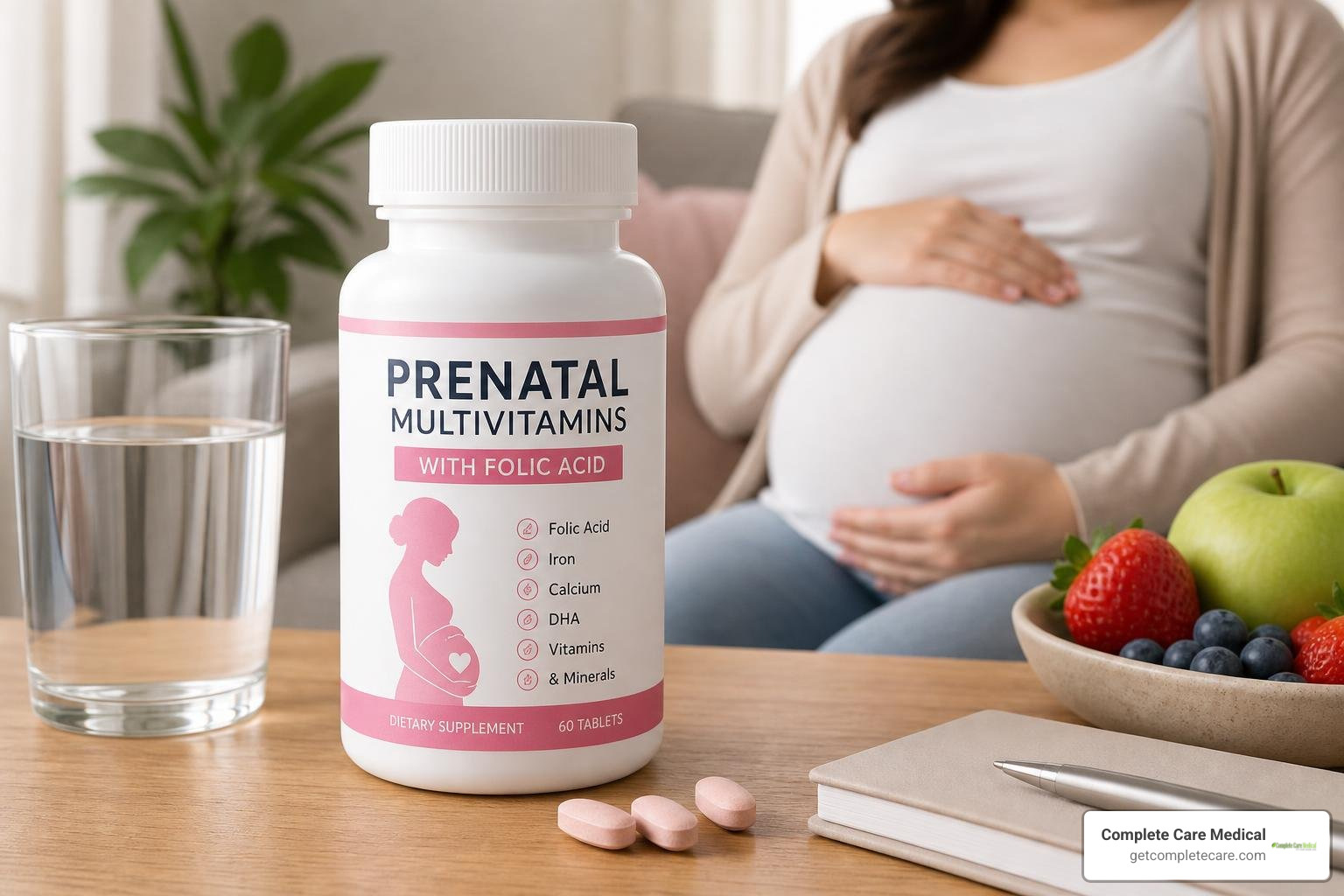
Prenatal multivitamins with folic acid are specially formulated supplements designed to fill the nutrient gaps that diet alone often can't cover during pregnancy. Here's a quick look at what they offer and who needs them:
| What | Why It Matters |
|---|---|
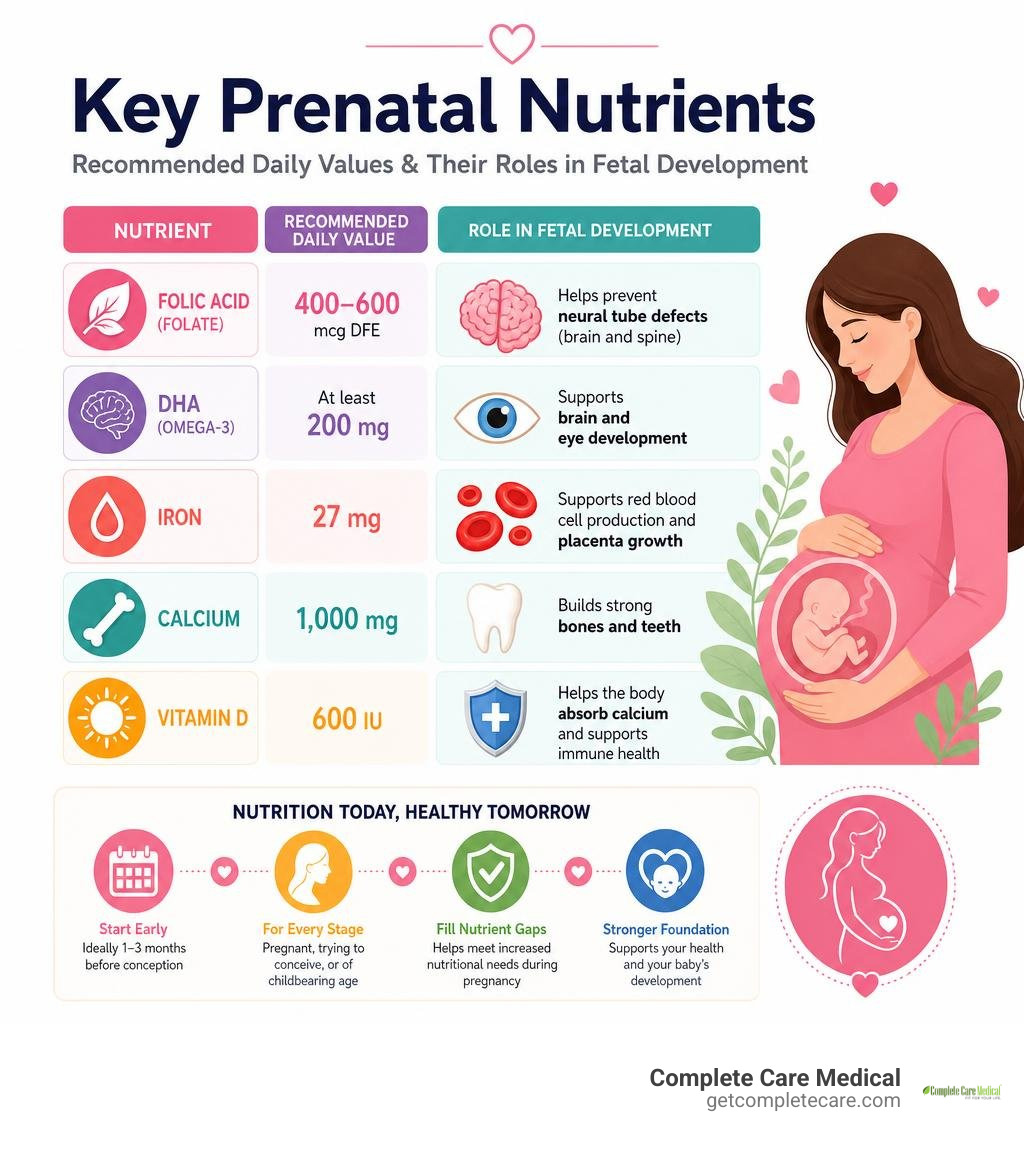
| Folic acid (400-600 mcg DFE daily) | Prevents neural tube defects like spina bifida |
| DHA (at least 200 mg daily) | Supports baby's brain and eye development |
| Iron (27 mg daily) | Prevents anemia and supports placenta growth |
| Calcium (1,000 mg daily) | Builds fetal bones and teeth |
| Vitamin D (600 IU daily) | Aids calcium absorption |
When to start: Ideally 1-3 months before conception, not just after a positive test.
Who needs them: Any woman who is pregnant, trying to conceive, or of childbearing age.
Pregnancy is one of the most nutritionally demanding periods of a woman's life. Yet research shows that roughly 17% of women of childbearing age don't get enough folate through food alone. And because nearly half of all pregnancies in the U.S. are unintended, many women miss that critical early window when the baby's neural tube, the structure that becomes the brain and spine is already forming.
That's why choosing the right prenatal vitamin matters more than most people realize. Not all formulas are equal. The form of folate, the presence of DHA, and third-party quality testing can all make a real difference in outcomes for both mom and baby.
Choosing the Best Prenatal Multivitamins with Folic Acid
When you walk down the supplement aisle or search online, the sheer volume of options can feel overwhelming. Finding the right prenatal multivitamins with folic acid requires looking closely at ingredient labels rather than just picking the prettiest bottle.
During pregnancy, your body's nutritional demands skyrocket to build new maternal tissues, expand your blood volume, and construct an entirely new human skeleton. While a balanced diet rich in leafy greens, lean proteins, and whole grains is always the foundation of good health, it is incredibly difficult to meet these elevated demands through food alone. To help bridge these gaps, many families turn to trusted retailers to compare options, such as browsing the selection of Walgreens Prenatal Multivitamins or looking into widely recognized brands like Nature Made Prenatal Multivitamin with Folic Acid Tablets - Walgreens.

To choose the best prenatal multivitamin for your unique journey, it helps to understand why these specific nutrients are recommended, how your body processes them, and how to manage common side effects.
Why Prenatal Multivitamins with Folic Acid Matter Before Conception
One of the most common misconceptions is that you should only start taking prenatals once you see a positive pregnancy test. In reality, the baby’s neural tube, which eventually becomes the brain and spinal cord, develops and closes within the first 28 days of pregnancy. This often happens before you even realize you are pregnant.
Because about half of all pregnancies in the United States are unintended, major health organizations like the CDC and the Mayo Clinic recommend that all women of childbearing age consume a daily folic acid supplement. Starting a prenatal regimen at least one to three months before trying to conceive ensures that your body has built up a protective reserve of folate. For detailed clinical guidance on early pregnancy nutrition, you can review the NHS Pregnancy Vitamin Guide, which highlights the importance of early daily supplementation.
Folic Acid vs. Methylfolate: What You Need to Know
When reading supplement labels, you will likely notice two different terms: folic acid and methylfolate (or l-methylfolate). Folate is the general term for vitamin B9, which is naturally found in foods like spinach, beans, and citrus fruits. Folic acid is the synthetic form used in fortified foods and traditional supplements.
However, folic acid must go through a multi-step conversion process in your liver to become l-methylfolate, the active form your cells can actually use.
This is where genetics come into play. It is estimated that 40% to 60% of the population has a genetic polymorphism (specifically on the MTHFR gene) that impairs their ability to convert synthetic folic acid into its active form. For these individuals, taking a supplement with pre-converted methylfolate can be highly beneficial because it bypasses this genetic bottleneck entirely. If you are looking for a formula designed with high bioavailability in mind, you might consider options like Needed Prenatal Vitamins with Methylfolate & Choline, which prioritize active nutrient forms.
The Role of DHA and Other Key Nutrients
A complete prenatal multivitamin does far more than just supply B9. To support a healthy pregnancy, several other co-nutrients must work in harmony:
- DHA (Docosahexaenoic Acid): This essential omega-3 fatty acid is a major structural component of your baby’s brain and retina. Clinical studies show that maternal DHA supplementation supports healthy cognitive and visual development. Because many prenatal vitamins do not naturally contain omega-3s, choosing an all-in-one softgel like Prenatal Multivitamin Folic Acid + DHA Softgels is a convenient way to ensure you are getting both your folate and your DHA in a single daily serving.
- Iron: Your blood volume increases by up to 50% during pregnancy. Iron is crucial for producing hemoglobin, which carries oxygen to your tissues and your growing baby.
- Vitamin D and Calcium: Calcium builds your baby's skeletal structure. If you don't consume enough calcium, your body will actually draw it from your own bones to support the baby. Vitamin D is essential because it allows your body to absorb that calcium efficiently. Interestingly, maintaining healthy Vitamin D levels is also linked to a lower risk of gestational diabetes, a condition that affects around 10% of pregnancies in the United States.
- Choline: Often called the "forgotten" prenatal nutrient, choline acts as an essential methyl donor that supports infant brain development and placenta function.

How to Select High-Quality Prenatal Multivitamins with Folic Acid
Not all supplement brands are created equal. Because the FDA does not approve dietary supplements for safety and effectiveness before they hit the market, you must look for signs of quality.
First, look for third-party testing seals on the packaging. Organizations like the U.S. Pharmacopeia (USP), NSF International, or the Clean Label Project independently verify that what is written on the label is exactly what is inside the bottle, and that the product is free from harmful levels of heavy metals. For example, Ritual Prenatal Multivitamin Supplement is widely recognized for its traceable ingredients and rigorous third-party testing.
Second, consider how the supplement feels on your stomach. The high iron content in many prenatals can sometimes trigger nausea or constipation. If you struggle with morning sickness, we recommend taking your prenatal with a light meal before bed rather than on an empty stomach in the morning. Staying well-hydrated and eating a fiber-rich diet can also help keep your digestion moving. Alternatively, you can look for formulas that use a gentler form of iron, such as the fermented iron found in the New Chapter Perfect Prenatal™ Multivitamin with Gentle Iron.
To help you compare standard daily requirements, here is a quick reference table showing what to look for on a supplement label:
| Nutrient | Recommended Daily Value for Pregnancy | Primary Role |
|---|---|---|
| Folate / Folic Acid | 600 mcg DFE (minimum 360–400 mcg folic acid) | Prevents neural tube defects |
| Iron | 27 mg | Prevents maternal anemia |
| Calcium | 1,000 mg | Supports bone and teeth development |
| Vitamin D3 | 600 IU (15 mcg) | Aids calcium absorption |
| DHA (Omega-3) | 200–300 mg | Brain and eye development |
| Choline | 450 mg | Supports cognitive health |
Conclusion: Supporting Your Pregnancy Journey
Choosing the right prenatal multivitamins with folic acid is one of the very first, and most impactful, decisions you can make for your baby’s future. By understanding your body's nutritional needs and selecting a high-quality, third-party-tested formula, you are taking a proactive step toward a vibrant, healthy pregnancy.
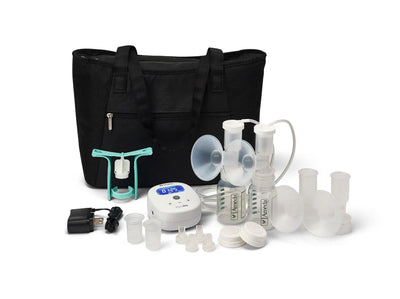
At Complete Care Medical, we are dedicated to supporting growing families through every stage of motherhood. While we offer high-quality wellness products directly to consumers, our core focus is helping mothers navigate the often-confusing world of insurance to secure essential maternity supplies, like top-tier, double-electric breast pumps, at absolutely no out-of-pocket cost.
We treat every mother who reaches out to us with the personalized, compassionate care she deserves. Whether you are navigating your insurance benefits, preparing your nursery, or trying to understand what your plan covers, we are here to guide you. For a comprehensive look at how to maximize your maternal benefits, read our guide on Everything You Need to Know Regarding Insurance Coverage for Pregnancy. Let us handle the paperwork so you can focus on what matters most: welcoming your new little one into the world.