












 800.503.7604
Allergies Affect Millions. Here's What You Need to Know.

Allergies are one of the most common chronic health conditions in the world, affecting up to 30% of adults and 40% of children in the United States alone.
Quick facts about allergies:
- An allergy is your immune system overreacting to a normally harmless substance
- Common triggers include pollen, pet dander, dust mites, mold, certain foods, and insect stings
- Symptoms range from a runny nose and itchy eyes to life-threatening anaphylaxis
- Allergies can develop at any age, even in adulthood
- Diagnosis involves skin tests or blood tests
- Treatment options include medications, lifestyle changes, and immunotherapy
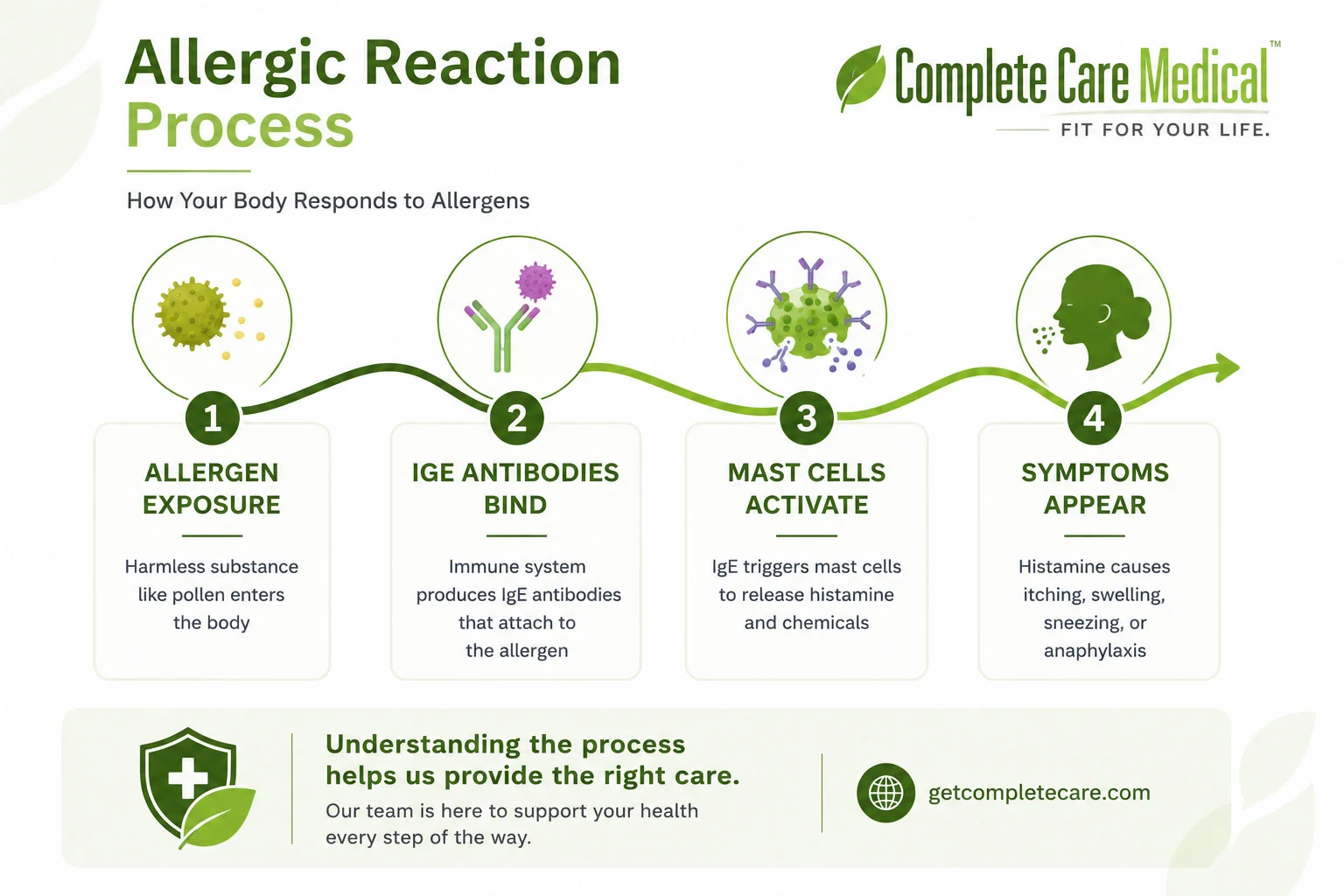
Allergies happen when your immune system mistakes a harmless substance, like pollen or pet dander, for a dangerous invader. It produces antibodies called IgE, which trigger the release of histamine and other chemicals. Those chemicals cause the symptoms you feel.
The reaction isn't the substance's fault. It's your immune system's overreaction.
Some allergic reactions are mild and annoying. Others can be life-threatening. That wide range is exactly why understanding allergies and knowing when to act matters so much.
Important allergy terms:
- Staying Healthy When Your Kids Bring Home Illness
- The Caregiver’s Wellness Checklist: Don’t Forget Yourself, Tips for those caring for a parent, partner, or child.
Understanding Allergies: Triggers, Symptoms, and the Immune System
To understand allergies, think of your immune system as an over-enthusiastic security team. It flags harmless substances, like pollen or cat dander, as dangerous threats. This process, called sensitization, involves the production of IgE antibodies that attach to mast cells. Upon re-exposure, these cells release histamine, causing the inflammation and itching associated with an allergic reaction. According to scientific research on allergy symptoms and causes, reactions can occur within minutes. For more, see more info about staying comfortable with chronic conditions.

Common Types of Allergies and Their Triggers
Allergens generally fall into these categories:
- Airborne: Pollen, mold spores, animal dander, and dust mites.
- Food: Peanuts, tree nuts, wheat, soy, fish, shellfish, eggs, milk, and sesame.
- Insect Stings: Venom from bees, wasps, hornets, and fire ants.
- Medications: Common culprits include penicillin and related antibiotics.
- Latex: Found in gloves, balloons, and some medical supplies.
- Contact: Nickel, fragrances, or oils from plants like poison ivy.
Recognizing Symptoms
Symptoms vary based on the point of contact:
- Respiratory: Sneezing, runny nose, wheezing, or shortness of breath.
- Ocular: Itchy, red, or watery eyes.
- Skin: Hives, rashes, or eczema.
- Gastrointestinal: Nausea, vomiting, or cramps (common with food allergies).
Anaphylaxis is a life-threatening emergency involving a drop in blood pressure and throat swelling. Use an epinephrine injector and call emergency services immediately.
| Symptom | Allergies | Common Cold | Sinus Infection |
|---|---|---|---|
| Itchy Eyes/Nose | Very Common | Rare | Rare |
| Fever | Never | Rare | Sometimes |
| Mucus Color | Clear/Watery | Thick/Yellow/Green | Thick/Yellow/Green |
| Duration | Weeks | 7-10 Days | 10+ Days |
| Aches/Pains | Never | Common | Facial Pain |
Risk Factors
Genetics play a major role; risk increases significantly if parents have allergies. The "hygiene hypothesis" suggests that ultra-clean modern environments may prevent the immune system from maturing properly. Other factors include age, pre-existing asthma, and high pollution exposure. Review scientific research on allergy diagnosis and management for more details.
Diagnosis, Treatment, and Long-Term Management
Proper diagnosis is the first step toward relief. Common diagnostic tests include:
- Skin Prick Test: Rapidly identifies triggers via small skin reactions.
- Blood Test (IgE): Measures antibodies; ideal for those with severe skin conditions.
- Patch Test: Identifies triggers for contact dermatitis.
- Elimination Diet: Identifies food triggers under medical supervision.
Learn more in our guide on identifying allergy symptoms.
Medical Treatments and Immunotherapy
Management follows a three-pronged approach:
- Avoidance: Using HEPA filters, monitoring pollen counts, and reading food labels.
- Medications: Antihistamines for itching, nasal corticosteroids for inflammation, and decongestants for stuffiness. Epinephrine is vital for severe reactions.
- Immunotherapy: Allergy shots or sublingual (SLIT) treatments "retrain" the immune system over several years to increase tolerance.
Can You Outgrow or Develop New Allergies?
While children often outgrow milk or egg allergies, adults can develop new sensitivities to shellfish or environmental triggers due to hormonal shifts or relocation. Conversely, early intervention is promising; introducing allergens like peanuts to infants (4-6 months) can reduce allergy risk by up to 81%.
Conclusion: Partnering with Complete Care Medical
Living with allergies shouldn't limit your quality of life. At Complete Care Medical, we are your partner in wellness. Based in Houston, Texas, we handle the complexities of insurance billing for medical supplies, like breast pumps and urological catheters, so you can focus on your health.
We also offer a curated selection of wellness products, from supplements to skin care. Whether you're in the U.S. or abroad, we provide expert support and high-quality care. Visit the Complete Care Medical news center for more health resources and stay informed on the latest in wellness.