









 800.503.7604
What Are the Dimensions of Wellness and Why Do They Matter?

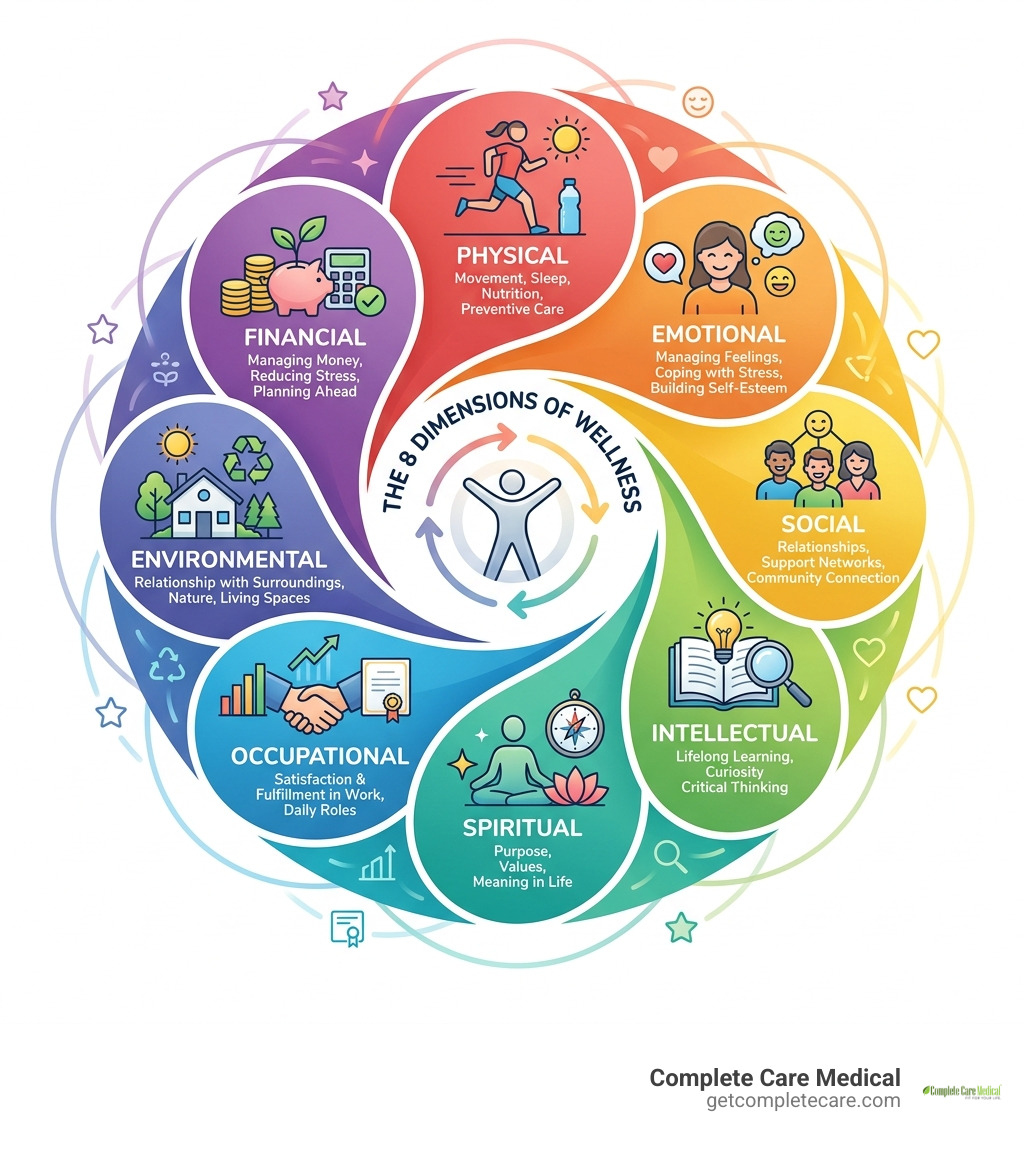
The dimensions of wellness are the key areas of life that together make up your total health and well-being. Most models recognize 8 core dimensions:
- Physical - movement, sleep, nutrition, and preventive care
- Emotional - managing feelings, coping with stress, building self-esteem
- Social - relationships, support networks, and community connection
- Intellectual - lifelong learning, curiosity, and critical thinking
- Spiritual - purpose, values, and meaning in life
- Occupational - satisfaction and fulfillment in your work or daily roles
- Environmental - your relationship with your surroundings, nature, and living spaces
- Financial - managing money, reducing financial stress, and planning ahead
These eight dimensions don't work in isolation. Progress in one area tends to lift the others. And when one area suffers, you often feel it everywhere.
Most people think of health as simply not being sick. But wellness is something much more active than that.
Halbert L. Dunn, widely considered the father of the wellness movement, was one of the first to distinguish between the absence of illness and what he called "high-level wellness." Later, in 1976, Dr. Bill Hettler built on that idea with his Six Dimensions of Wellness model, which has since expanded into the widely used eight-dimensional framework promoted by organizations like SAMHSA and the National Wellness Institute.
The core idea is simple: wellness is an ongoing process, not a destination. It's about making small, consistent choices across all areas of your life that move you toward your full potential.
In this guide, we'll walk through each dimension and show you practical ways to strengthen them one step at a time.
Dimensions of wellness definitions:
Understanding the 8 Core Dimensions of Wellness
The dimensions of wellness provide a holistic map of health. While Dr. Bill Hettler’s 1976 model focused on six areas - Social, Intellectual, Spiritual, Physical, Occupational, and Emotional, modern frameworks like SAMHSA’s now include Environmental and Financial wellness.
Wellness is about finding "personal harmony" rather than perfect balance. The goal is to ensure no single dimension is neglected for so long that it drags down the others. You can Learn the Eight Dimensions of Wellness through institutional resources, but mastery happens in your daily habits.
Physical and Emotional Dimensions of Wellness
Physical Wellness Replenish your body through movement, nutrition, and rest.
- Movement: Aim for 150 minutes of moderate exercise weekly. The Importance Of Exercise For Overall Health And Fitness is vital.
- Sleep: Prioritize 7–9 hours of quality rest. Check our Quality Sleep Solutions Top 5 Tips For Better Sleep.
- Nutrition: Fuel with whole foods and hydration. Read more on The Role Of Nutrition In Promoting Wellness.
Emotional Wellness Navigate life's ups and downs with resilience and self-acceptance.
- Coping: Use mood tracking or the 4-7-8 breathing technique to lower stress.
- The Connection: Exercise releases endorphins. How To Master Mind Body Connection With 5 Easy Tips helps stabilize your emotional state.
Social and Spiritual Dimensions of Wellness
Social Wellness Build support networks based on trust and respect. Strong social bonds are linked to better cognitive health. See our guide on All About Staying Social As You Age.
Spiritual Wellness Explore your inner self and find meaning. Foster this through gratitude or nature. Finding harmony between your Mind Body And Soul is a cornerstone of health.
Intellectual and Occupational Growth
Intellectual Wellness Stretch your mind through creative pursuits and lifelong learning to prevent mental stagnation.
Occupational Wellness Seek satisfaction in your work. Aligning your career with your values improves well-being. As noted in Dimensions of wellness: Change your habits, change your life, neglecting this area leads to burnout.
Environmental and Financial Stability
Environmental Wellness Your relationship with your surroundings matters. Spend time outdoors and create safe, comfortable living spaces. Experience the Benefits Of Walking in nature.
Financial Wellness Manage resources to reach realistic goals. Budgeting and planning can dramatically reduce financial anxiety.
How to Build Lasting Habits for Holistic Health
Research shows 40% of behavior is habitual. To change your life, you must change your habits.
The 66-Day Rule It takes an average of 66 days for a new behavior to become automatic. This requires initial self-regulation until the habit loop takes over.
The Habit Loop Habits follow a cycle: Cue (trigger), Routine (action), and Reward (benefit). To replace a habit, insert a new routine while keeping the cue and reward. See Small Steps That Lead To A Healthier You.

Assessing Your Current Wellness Balance
Identify lagging areas by rating your satisfaction in each dimension from 1 to 10.
| Dimension | 6-Dimension Model | 8-Dimension Model | 10-Dimension Model |
|---|---|---|---|
| Physical | Included | Included | Included |
| Emotional | Included | Included | Included |
| Social | Included | Included | Included |
| Intellectual | Included | Included | Included |
| Spiritual | Included | Included | Included |
| Occupational | Included | Included | Included |
| Environmental | - | Included | Included |
| Financial | - | Included | Included |
| Creative | - | - | Included |
| Digital | - | - | Included |
Focus on one or two areas for the next 66 days. Our Top 10 Tips For Maintaining A Healthy Lifestyle can help you start.
Overcoming Obstacles to Total Well-being
At Complete Care Medical, we believe medical challenges shouldn't stop you from thriving. Whether navigating The Importance Of Regular Health Check Ups or Mental Health After Life Changing Diagnosis, we are your partners.
Complete Care Medical handles the logistics, billing, and insurance for urological catheters, diabetic supplies, ostomy and wound care products, breast pumps, and more, so patients can focus on their health and well-being. Based in Houston and serving individuals nationwide, we are committed to a personalized, compassionate approach, treating every customer like family. Find more wellness resources on our blog.
Wellness is about being better today than yesterday. By focusing on the dimensions of wellness, you are learning to thrive.