







 800.503.7604
What You Need to Know About Urinary Retention Catheter Insurance

Urinary retention catheter insurance covers the cost of catheters and related supplies when your doctor determines you have a medically necessary bladder condition. Here is a quick summary:
- Medicare Part B covers up to 80% of catheter costs after your annual deductible.
- Monthly allowances: up to 200 intermittent catheters, 1 indwelling catheter, or 35 external catheters.
- Medicaid & Private Insurance typically cover catheters with a valid prescription and supporting documentation.
- Key requirement: Your condition must be expected to last at least 3 months to qualify as "permanent."
Without insurance, catheters can cost over $2,000 per year out of pocket. For over 20+ years Complete Care Medical has helped tens of thousands of patients navigate insurance to get the supplies they need without the frustration.
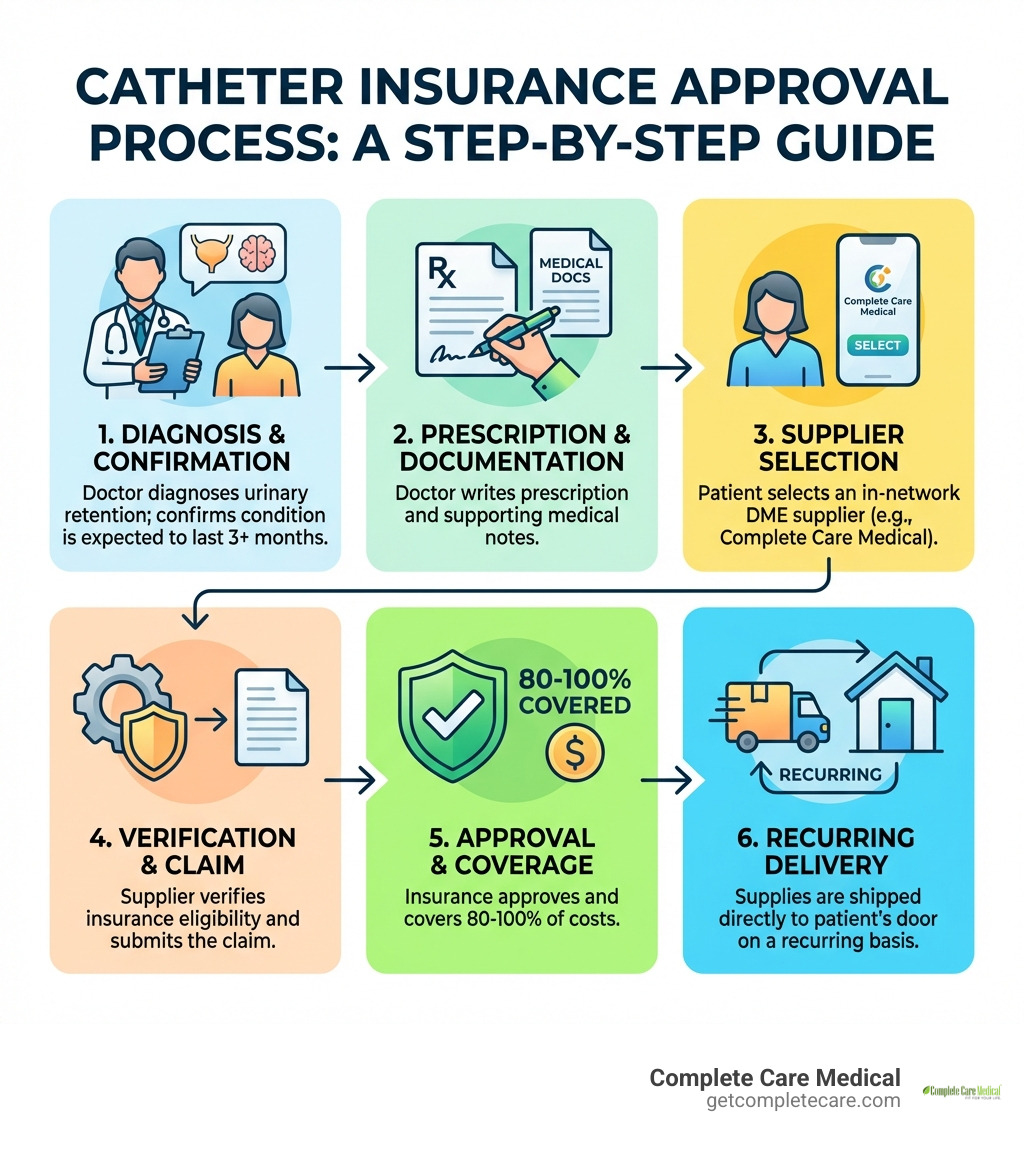
Navigating Urinary Retention Catheter Insurance and Medical Necessity

For insurance providers like Medicare, coverage hinges on "permanence." According to scientific research on urological supply coverage, a condition is permanent if it is not expected to be medically or surgically corrected within three months.
When is a Catheter Medically Necessary?
To qualify for catheter insurance, your doctor must document a specific diagnosis, such as Acute/Chronic Urinary Retention or Neurogenic Bladder. Your medical records must clearly state the frequency of catheterization required. For a deeper dive, read everything you need to know about urinary catheters.
Medicare Coverage and Requirements
Under Medicare Part B, catheters are categorized as "prosthetic devices." Medicare typically pays 80% of the approved amount after your annual deductible is met. Supplemental insurance (Medigap) often covers the remaining 20%.
Understanding Monthly Allowances and Catheter Types
Insurance companies follow strict utilization guidelines. If you need more than the standard allowance, your doctor must provide a "Letter of Medical Necessity."
| Catheter Type | HCPCS Code | Medicare Monthly Limit |
|---|---|---|
| Intermittent (Straight/Coude) | A4351 / A4352 | Up to 200 units |
| Sterile Intermittent Kits | A4353 | Up to 200 units |
| Indwelling (Foley) | A4338 / A4344 | 1 per month |
| Male External (Condom) | A4349 | Up to 35 units |
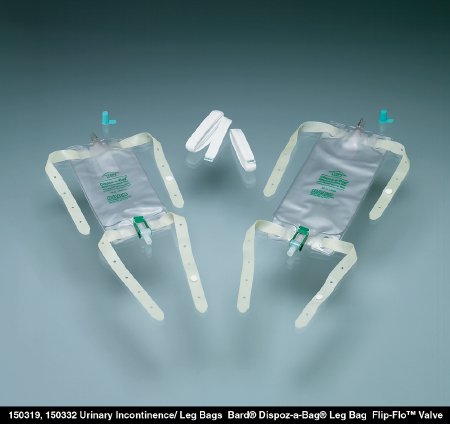
| Drainage Bags (Leg/Large) | A4357 / A4358 | 2 per month |
How to Secure Your Supplies and Avoid Denied Claims
Missing or insufficient documentation causes over 80% of denied claims. To ensure approval, your file must include a prescription specifying the catheter type and frequency, clinical notes supporting that frequency, and a face-to-face doctor visit within the last six months. We recommend reading our guide on maximizing your insurance benefits to lower out-of-pocket costs.
Medicaid and Private Insurance Variations
- Medicaid: Rules vary by state; some require "medical failure" with basic catheters before covering advanced options.
- Private Insurance: PPO plans offer more flexibility, while HMOs often require specific contracted providers. Some surprising items might be covered, as noted in our article on the most surprising medical supplies covered by insurance.
Qualifying for Advanced Supplies: Coudé and Closed Systems
If standard catheters are unsuitable, you may qualify for Coudé tip (for obstructions) or Closed Systems (for recurrent UTIs—2+ in 12 months). Your doctor must document why standard supplies won't work. See our your ultimate guide to buying urinary catheters online.
2025 Policy Changes and the Role of Your Supplier
Telehealth expansion now allows for virtual prescription renewals, but coding is increasingly precise. At Complete Care Medical, we handle the insurance "heavy lifting," contacting your doctor for notes, verifying benefits, and managing billing. If you need a partner who understands**** catheter**** insurance, start your insurance verification today and let us help you live with confidence.