












 800.503.7604
When Your Body Sends Urgent Signals: Understanding Blood and Burning During Urination

Blood and burning when I pee are symptoms that understandably cause alarm. If you're experiencing these issues, here's what you need to know.
Quick Answer: Common Causes of Blood and Burning During Urination
- Urinary Tract Infections (UTIs): The most common cause, especially in women.
- Kidney Stones: Mineral buildup causing pain and bleeding.
- Bladder Inflammation (Cystitis): Infection or irritation of the bladder.
- Enlarged Prostate (BPH): Common in men over 50.
- Kidney Infections: A more serious type of UTI.
- Sexually Transmitted Infections (STIs): Can affect the urinary tract.
- Medications: Some drugs can cause urinary bleeding.
When to Seek Immediate Care: If you have heavy bleeding, blood clots, high fever, severe pain, or cannot urinate, contact emergency services right away.
These symptoms should never be ignored. While often due to treatable conditions like UTIs, blood in the urine (hematuria) can signal serious issues like bladder cancer. The burning sensation (dysuria) is also common with UTIs. Hematuria can be visible (pink, red, or brown) or microscopic. Any blood in your urine requires medical evaluation.
At Complete Care Medical, we've supported thousands of customers with urological conditions. We understand how frightening these symptoms can be and are here to help.
This guide will explain potential causes, when to seek help, and available treatment options for your urinary health concerns.
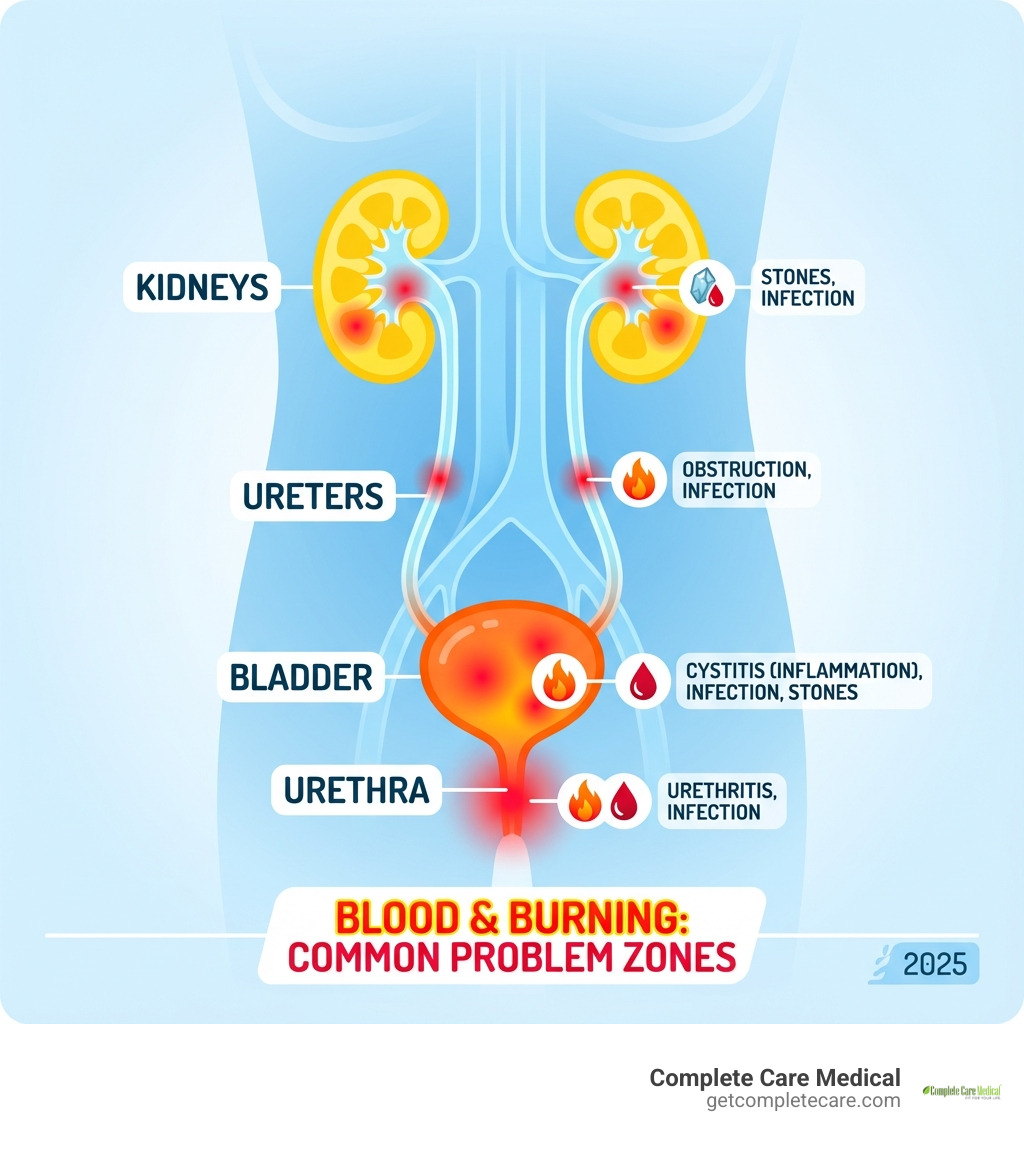
Why is There Blood and Burning When I Pee? Common Causes and Diagnosis
Experiencing blood and burning when I pee points to an issue within your urinary system—the network of kidneys, ureters, bladder, and urethra that filters and expels waste.

Blood in the urine (hematuria) can be visible (pink, red, or brown) or microscopic. The burning sensation (dysuria) can feel like stinging or itching. Both symptoms require medical attention to determine the underlying cause.
Decoding the Symptoms: What to Look For
To help your doctor, note the specifics of your symptoms:
- Blood Appearance: Is the urine pink, red, or brown? Are there clots?
- Burning Sensation: Is the feeling a sharp burn, a dull ache, or a sting? Is it internal or external?
- Pain Location: Do you feel pain in your lower abdomen, flanks (sides), or back?
- Frequency and Urgency: Are you urinating more often or feeling a sudden, uncontrollable urge to go?
- Other Symptoms: Note any fever, chills, nausea, foul-smelling or cloudy urine, or an inability to urinate, as these can indicate a serious infection or obstruction.
Common Culprits: From UTIs to Kidney Stones
Many common and treatable conditions cause blood and burning when I pee. Here are the most frequent culprits:
-
Urinary Tract Infections (UTIs): The most common cause, UTIs occur when bacteria enter the urinary tract, causing a frequent urge to urinate, burning, and sometimes bloody urine. If untreated, they can lead to kidney infections.
- Our tip: Learn how to reduce your risk with our 5 Tips to Help Prevent UTIs.
Kidney Stones: Hard mineral deposits that form in the kidneys. Larger stones can cause severe pain, bleeding, and burning as they pass.
Enlarged Prostate (BPH) and Prostatitis: Common in men over 50, an enlarged prostate (BPH) can squeeze the urethra, causing difficult urination and bleeding. Prostatitis (prostate inflammation) causes similar symptoms.
Cystitis and Urethritis (Non-Infectious): Bladder or urethra inflammation from irritants (soaps, douches) or vigorous sex can cause burning and microscopic blood in the urine.
Sexually Transmitted Infections (STIs): Infections like chlamydia, gonorrhea, and herpes can inflame the urethra, causing painful urination and sometimes blood.
Vigorous Exercise: Intense activity like long-distance running can cause temporary, harmless blood in the urine. Still, have it checked by a doctor.
Medications: Some antibiotics, cancer drugs, and blood thinners can cause blood in the urine as a side effect. Inform your doctor.
How Doctors Diagnose Blood and Burning When I Pee
The diagnostic process is key to finding the right treatment. Here’s what to expect:

Medical History and Physical Exam: Your doctor will review your symptoms and health history. A physical exam checks for tenderness or other physical signs.
Urinalysis: A urine sample is tested for blood cells, bacteria, and other markers of infection or kidney problems.
Urine Culture: If a UTI is suspected, this test identifies the specific bacteria and the best antibiotics to treat it.
Blood Tests: These can check for signs of infection and assess your kidney function.
Imaging Tests: An Ultrasound, CT Scan, or MRI provides a detailed view of the urinary tract to find stones, tumors, or other issues.
Cystoscopy: A urologist uses a thin tube with a camera (cystoscope) to look inside the urethra and bladder for tumors or other problems, especially if cancer is suspected.
This comprehensive approach ensures you receive effective care. For more, see the NIDDK's guide to hematuria testing.
Finding Relief: Treatment Options and When to See a Doctor
Once your provider diagnoses the cause of blood and burning when I pee, they will create a treatment plan. Treatment varies by condition:
Antibiotics: For bacterial infections like UTIs, it's crucial to complete the full course to clear the infection.
Pain Relief Medication: Over-the-counter pain relievers help with discomfort. Your doctor may also prescribe medication to target urinary pain.
Hydration: Drinking plenty of water helps flush out bacteria and can help small kidney stones pass.
Lifestyle Changes: Avoiding irritants (e.g., scented soaps) helps with inflammation. For BPH, reducing fluids before bed may be advised.
Specialist Referral: You may be referred to a Urologist for issues like kidney stones or prostate problems, or a Nephrologist for kidney diseases.
Maintaining kidney health is key. Learn more in our article on Caring for Your Kidneys.
The Link to Cancer: Understanding the Risk of Blood in Urine
While most causes are benign, blood in the urine (hematuria) is a key early warning sign for urological cancers and must be evaluated.
Bladder Cancer: Painless, intermittent blood in the urine is the most common first symptom for 80% of patients. Any instance requires a doctor's visit, as early detection is critical.
Kidney Cancer: Hematuria can be a sign, sometimes accompanied by side pain, an abdominal lump, or weight loss.
Prostate Cancer: While less common, blood in the urine can be a symptom, particularly in advanced stages.
Don't panic, but act. See your doctor immediately for any blood in your urine to ensure early diagnosis and treatment. For more, see the Mayo Clinic's guide on hematuria.
When to Seek Urgent Medical Attention for Blood and Burning When I Pee
While any instance of blood and burning when I pee warrants a doctor's visit, some symptoms require immediate medical attention. Go to an emergency room if you experience:
- Severe Pain: Sudden, intense pain in your back, abdomen, or groin.
- High Fever and Chills: Can indicate a serious kidney infection.
- Inability to Urinate: A potential sign of a complete blockage.
- Heavy Bleeding or Blood Clots: Requires immediate evaluation.
- Nausea and Vomiting: Especially when combined with severe pain or fever.
Do not delay seeking help for these symptoms. Call your local emergency number (e.g., 911 in the US/Canada, 112 in Europe, or 111 in the UK).
Your Path to Wellness and Support
Experiencing blood and burning when I pee is challenging. An accurate diagnosis from a healthcare professional is the first step to getting relief.
At Complete Care Medical, our mission is to provide high-quality medical supplies with compassionate support. Once you have a treatment plan, we can help you manage your condition with the right supplies and guidance.
If you have these symptoms, consult a healthcare professional. For additional resources, explore our guide on Coping Strategies for Urological Conditions. We're your partner in health.