






 800.503.7604
Why Summer Vacation Safety Can Make or Break Your Trip

Summer vacation safety prevents common injuries and emergencies that send families to the ER.
Essential summer vacation safety tips:
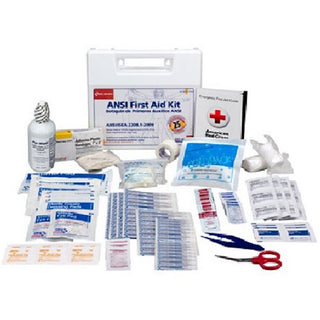
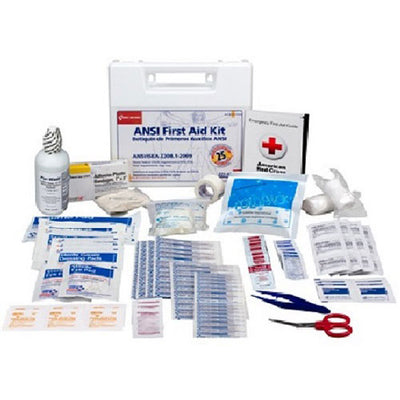
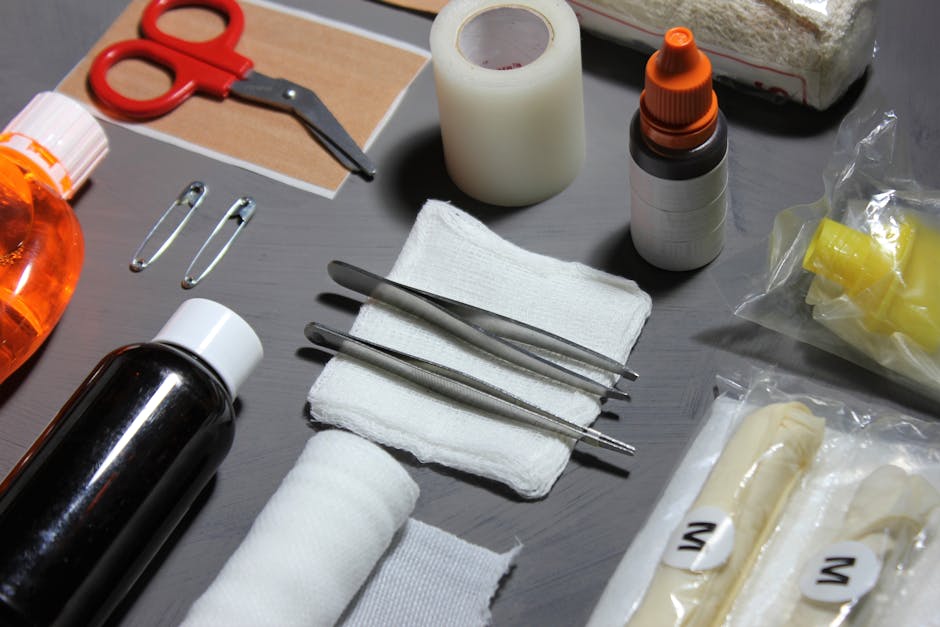
- Plan ahead — Check CDC destination pages and pack a travel health kit 4–6 weeks before departure.
- Beat the heat — Hydrate and avoid outdoor activity between 10 a.m. and 4 p.m.
- Stay sun-safe — Use SPF 30+ broad-spectrum sunscreen and reapply every 80 minutes.
- Watch the water — Designate a "water watcher" and wear life jackets on boats.
- Prevent bug bites — Use EPA-registered repellent and check for ticks.
- Drive safely — Inspect tires, A/C, and fluids before road trips.
- Secure your stay — Locate fire exits and use all door locks in rentals.
- Post-travel health — Disclose travel history to your doctor if you feel sick.
Summer brings risks like drowning, skin cancer, and heat illness. This guide covers major risk areas so your family can enjoy the season safely.
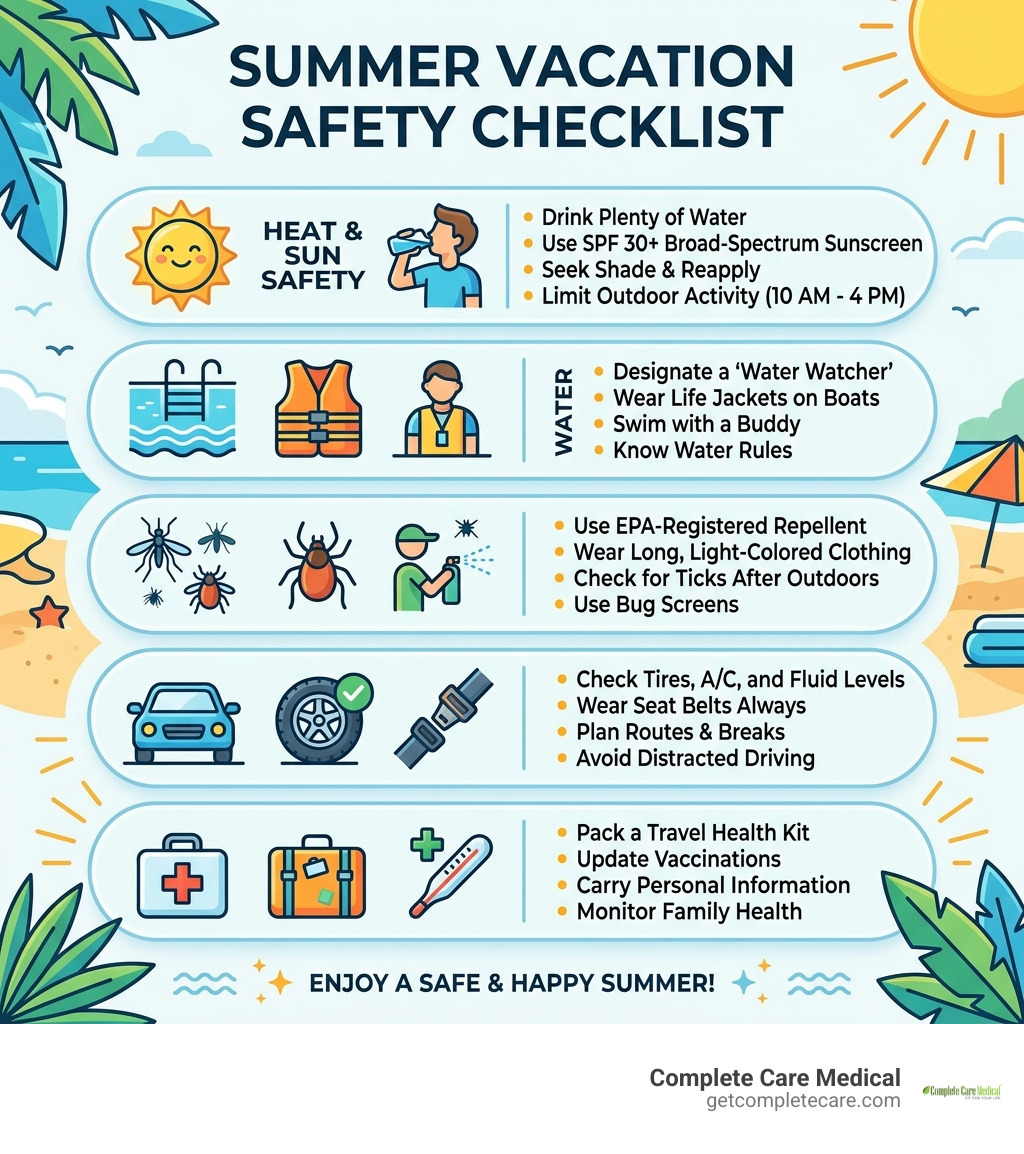
Essential Summer Vacation Safety Strategies
Summer vacation safety relies on hydration, protection, supervision, and preparation.
Heatstroke Prevention and Hydration
Heat exhaustion can escalate into heatstroke, a medical emergency. Aim for at least eight glasses of water daily, increasing intake with activity. For those with spinal cord injuries, hydration is critical as temperature regulation may be impaired.
UV Protection and Bug Bites
Skin cancer is the most common cancer worldwide. Use broad-spectrum SPF 30+ even on cloudy days. Additionally, mosquitoes and ticks transmit diseases like Lyme and West Nile. Use EPA-registered repellents and conduct full-body tick checks after outdoor activities.
Fire and Food Safety
Keep grills 10 feet from structures and separate raw meats to prevent cross-contamination. Leave fireworks to professionals to avoid preventable burns.
Pre-Trip Planning and Road Trip Readiness
Schedule a travel health appointment 4–6 weeks before departure. Check Summer Travel | Travelers' Health | CDC for destination advice. If you use medical equipment, see our planning-a-summer-trip-with-medical-supplies-here-s-your-travel-checklist.
Vehicle Maintenance
According to Summer Driving & Road Trip Tips | NHTSA, inspect:
- Tires: Check pressure and tread depth.
- A/C and Fluids: Ensure cooling systems and oil levels are optimal.
- Belts and Hoses: Look for cracks or bulges.
- Load Limits: Avoid overloading rooftop carriers.
Beating the Heat and Sun Exposure
Plan strenuous activities for early morning or late evening.
- Sunscreen: Apply 15–30 minutes before exposure and reapply every two hours.
- Heat Illness: Watch for heavy sweating and dizziness (exhaustion) or high body temperature and confusion (heatstroke). See our tips-to-safely-exercise-in-the-heat.
- Hot Cars: Never leave children or pets in a parked car. Use the "Look Before You Lock" rule.
Water Safety and Drowning Prevention
Drowning is the leading cause of death for children ages 1–4. It is often silent.
- Water Watcher: Designate an adult for 15-minute shifts of undistracted supervision.
- Open Water: Swim parallel to shore if caught in a rip current. Always wear U.S. Coast Guard-approved life jackets on boats.
- Kids' Health: Read our 10-tips-to-keep-your-kids-healthy-in-the-summer.
Protecting Against Pests and Environmental Hazards
Ticks are active April through September. Use DEET or picaridin and treat gear with permethrin. For outdoor survival, see our summer-survival-tips-for-your-outdoor-adventures.
Staying Secure in Hotels and Transit
- Fire Safety: Count doors to the nearest exit and check smoke alarms in rentals.
- Security: Use deadbolts and in-room safes. Avoid real-time social media location tagging.
- International Travel: Register with the Smart Traveler Enrollment Program (STEP) and review How to Stay Safe on Vacation.
Prioritizing Your Health After the Trip
If you feel sick after returning, see a healthcare provider and disclose your travel history. Some illnesses have incubation periods that delay symptoms.
Monitoring for Lingering Issues
Watch for:
- Unusual rashes or non-healing bites.
- Persistent gastrointestinal issues.
- Lingering fatigue or dehydration.
At Complete Care Medical, we support your health with insurance-covered supplies like catheters and wellness products. For more tips, visit our Wellness News Blog.
Safe travels and enjoy your summer!