







 800.503.7604
Start With Five Minutes of Joint Mobility Exercises

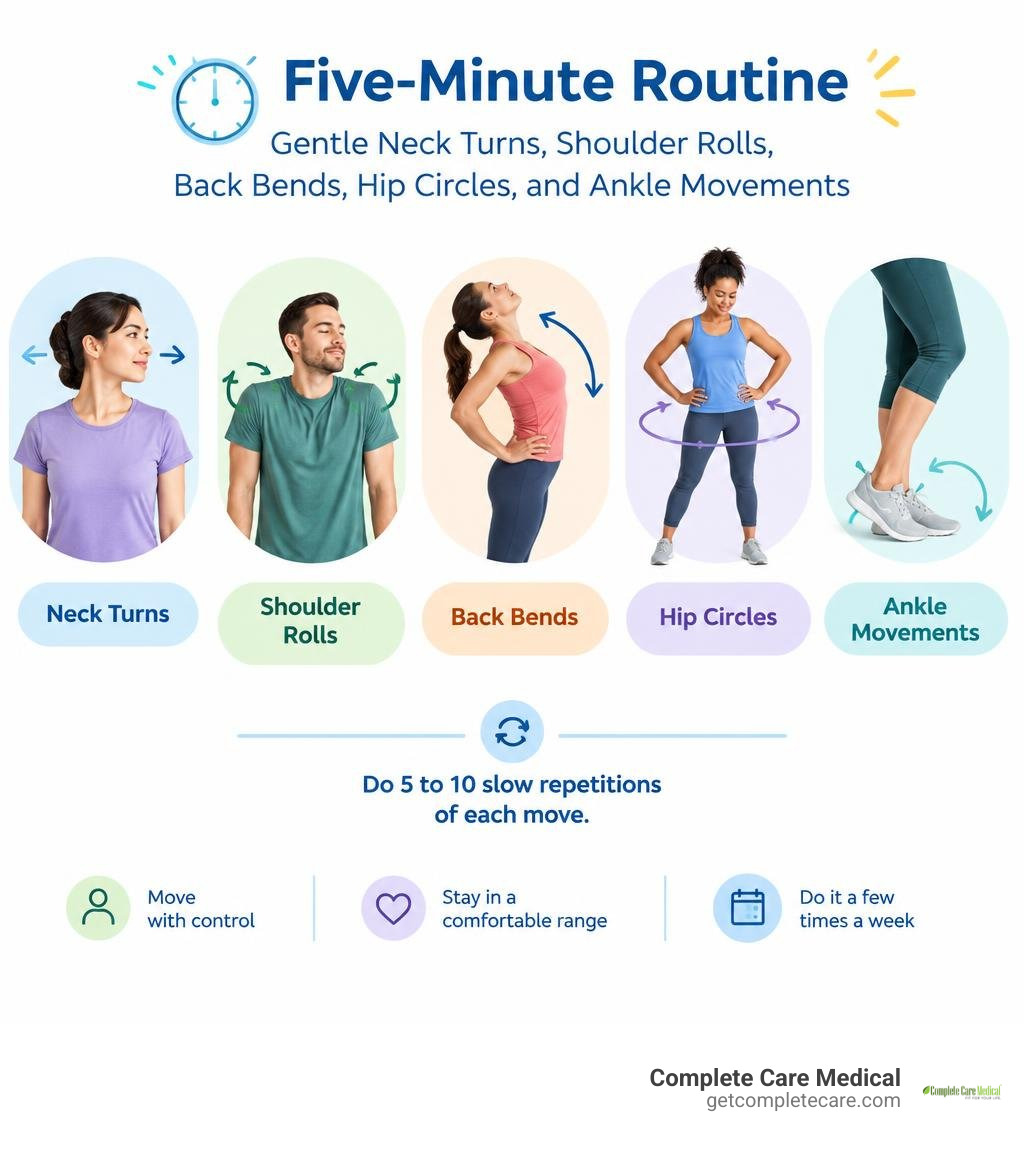
To improve how your joints move, try this five-minute, equipment-free routine: turn your head gently from side to side, roll your shoulders, round and arch your back, circle your hips, and move each knee toward your toes while keeping your heel down. Do 5 to 10 slow repetitions of each move, staying in a comfortable range. Start a few times a week; short, regular sessions are more useful than forcing a deep stretch once in a while.
These movements help you practice controlled motion, not just stretch your muscles. If a move causes sharp pain, stop. If you have an injury or are recovering from treatment, ask your healthcare team which movements are right for you.
With decades of experience helping individuals access quality healthcare and wellness products, Complete Care Medical is committed to providing practical guidance that supports everyday health and well-being. Maintaining joint mobility is an important part of staying active, comfortable, and independent. This guide to joint mobility exercises highlights simple, effective movements that can easily fit into daily routines, helping support flexibility, range of motion, and long-term joint health.
Understanding Mobility vs. Flexibility for Total Body Movement
Many people use "flexibility" and "mobility" interchangeably, but they describe different physical capabilities. Flexibility is the passive ability of a muscle to lengthen or stretch through a range of motion. Mobility, on the other hand, is the active strength and motor control required to move a joint freely and intentionally through its intended range of motion.
When you practice controlled joint movement, you stimulate the production and circulation of synovial fluid—the natural lubricant within the joint capsule that nourishes cartilage and reduces friction. Active mobility also engages your nervous system, building movement confidence and coordination while preserving healthy joint structures.
| Feature | Muscular Flexibility | Joint Mobility |
|---|---|---|
| Primary Target | Muscles and connective tissue | Joints, joint capsules, and nervous system |
| Type of Control | Passive (gravity, bands, or external force) | Active (muscular contraction and neuromuscular control) |
| Primary Benefit | Muscle length and tissue extensibility | Usable range of motion and joint stability |
| Daily Application | Holding a static hamstring stretch | Deep squatting, reaching overhead, climbing stairs |
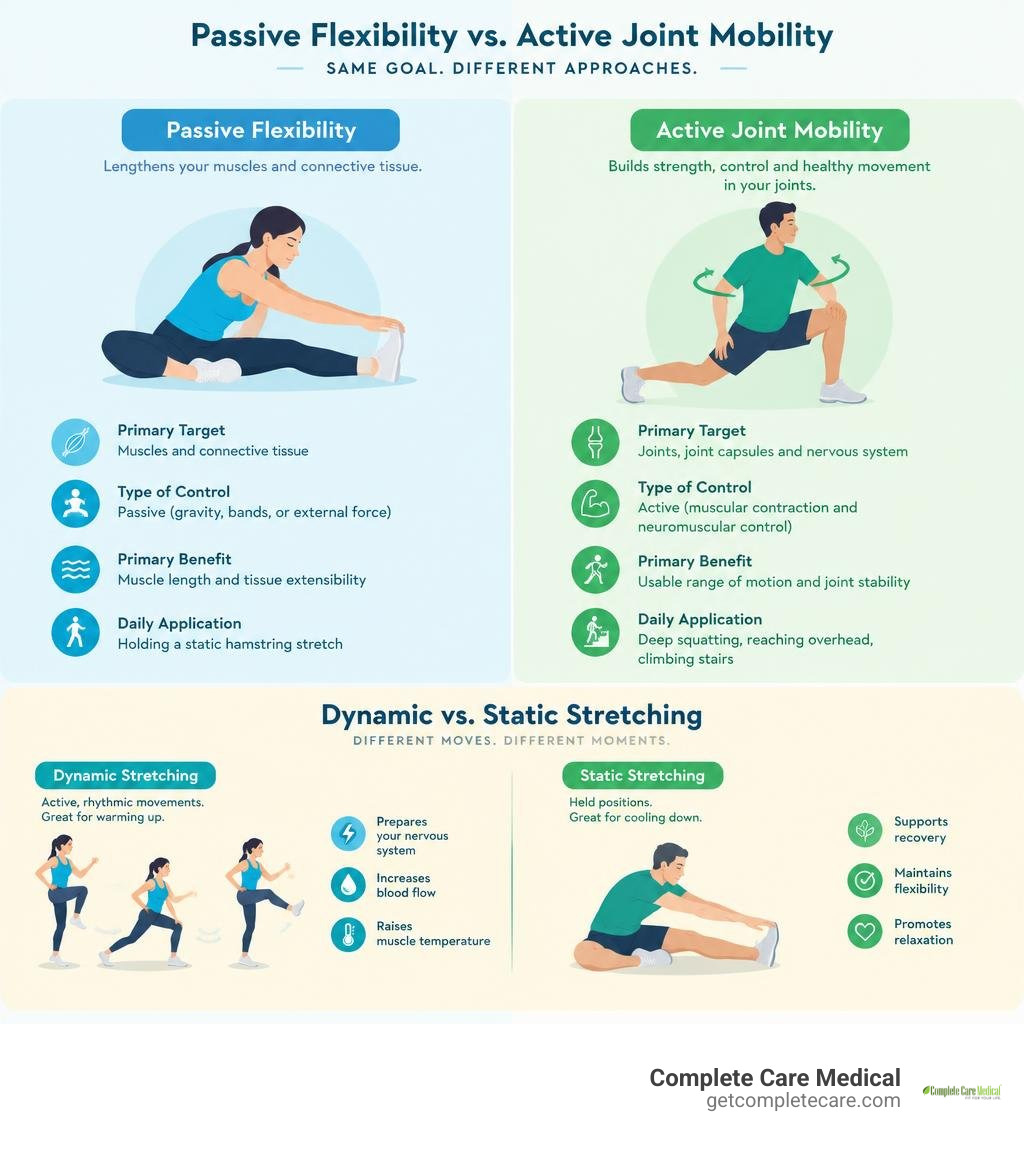
Dynamic vs. Static Stretching: When and How to Use Each
Both dynamic and static stretching serve valuable roles in movement health, but timing determines their effectiveness.
Dynamic stretching involves active, rhythmic movements where joints are repeatedly taken through their range of motion without holding the end position. According to a 2024 review, dynamic stretching as part of a pre-workout warm-up may improve athletic performance and increase functional range of motion in the lower limbs. It prepares the nervous system, increases local blood flow, and elevates muscle temperature.
Static stretching involves extending a muscle to its end range and holding that position for 15 to 60 seconds. A 2024 review noted that stretching frequently over two weeks or more can significantly improve long-term passive range of motion, particularly when utilizing static techniques. Static holds are ideal for post-workout cool-downs or evening routines to promote parasympathetic recovery. Understanding the importance of exercise for overall health and fitness helps ensure you pair the right stretch with the right activity phase.
Essential Joint Mobility Exercises for Every Body Area
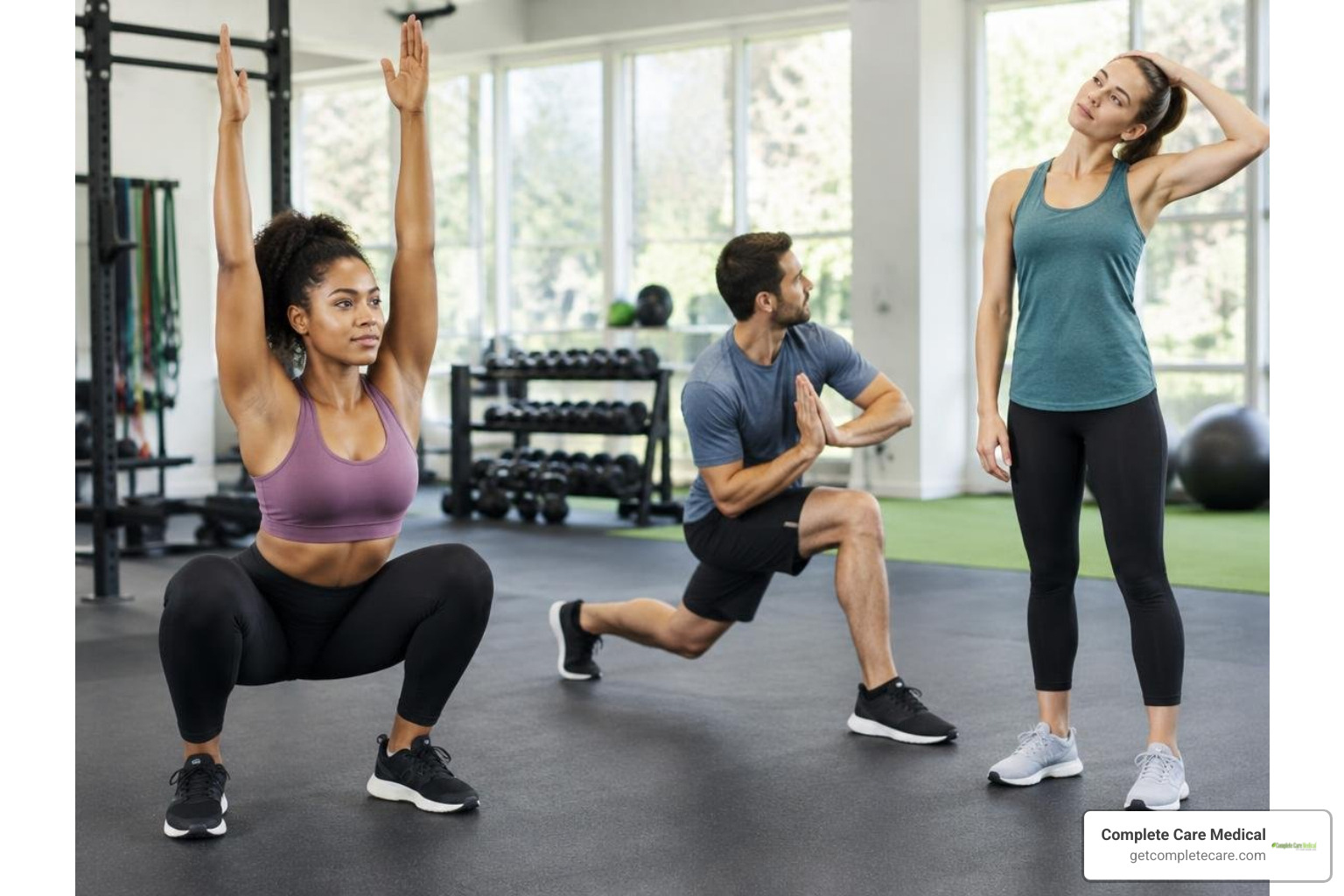
Your body functions as an interconnected kinetic chain. A restriction in ankle dorsiflexion can alter knee mechanics, while a stiff thoracic spine often forces the lower back or neck to overcompensate. Performing targeted joint drills serves as a daily movement diagnostic, allowing you to identify tight areas before they turn into discomfort. You can also explore specialized bone and joint health tools to support physical function.
Full-Body Joint Mobility Exercises from Head to Toe
Integrate these head-to-toe movements to keep your entire kinetic chain moving smoothly:
- Neck Half-Circles: Gently lower your chin toward your chest and roll your head slowly to one shoulder, pause, and sweep back down to the opposite side. Complete 3 to 5 controlled half-circles per direction.
- Shoulder Rotations & Openers: Stand tall, reach your arms wide, and rotate your shoulders forward and backward, exploring your full range. Perform 8 to 10 slow repetitions.
- Cat-Cow Stretch: On hands and knees, inhale as you drop the belly and look slightly up (Cow), then exhale as you round your spine toward the ceiling (Cat). Perform 6 to 10 fluid cycles.
- Thoracic Spine Twists: In a quadruped or side-lying position, place one hand behind your head and rotate your upper torso toward the ceiling, then bring the elbow down toward the floor for 6 to 8 repetitions per side.
- 90/90 Hip Switches: Sit on the floor with both knees bent at 90-degree angles (one leg in front, one to the side). Keeping your torso upright, rotate your knees across to the opposite side for 5 to 8 controlled transitions.
- Knee-to-Wall Ankle Mobilization: Stand facing a wall in a staggered stance. Drive your front knee forward past your toes toward the wall while keeping your heel planted flat on the floor. Follow evidence-based principles like those found in the AAI Fit for Life Mobility Programme to support healthy lower-limb mechanics.
Equipment-Free Joint Mobility Exercises for Home and Office Work
Prolonged sitting, especially beyond 60 minutes at a time, leads to hip and knee stiffness and reduces blood circulation. You do not need a gym setup to counteract desk-bound stiffness; simple bodyweight drills done right beside your workstation can restore comfort:
- Chair Squats: Stand in front of your chair, hinge at your hips, and slowly lower your hips until you lightly touch the seat, then drive through your heels to stand. Perform 8 to 10 reps to mobilize hips and knees.
- Wall Angels: Stand with your back, head, and elbows against a flat wall. Slide your arms overhead and back down in a slow "snow angel" motion for 8 reps to reverse rounded posture.
- Standing Heel and Toe Lifts: Stand tall and rock slowly onto your toes, holding for two seconds, then rock onto your heels to lift the toes. Complete 10 reps to improve ankle circulation.
- Standing Hip Circles: Place your hands on a desk for balance and make large, slow circles with one knee lifted, completing 5 circles clockwise and counter-clockwise per leg.
For targeted tissue release and progressive resistance at home or the office, pairing these drills with a CanDo foam roller or CanDo exercise bands can further enhance movement quality.
How to Program Daily Mobility Routines and Adapt for Special Populations
A successful mobility routine relies on consistency over intensity. Aim for 5 to 10 minutes of daily joint mobility exercises in the morning or as a movement break during the day. If you are focused on long-term joint comfort, pairing daily movement with nutritional solutions like a joint health support supplement can help nourish cartilage, while educational guidance on managing arthritis offers practical strategies for staying active through chronic conditions.
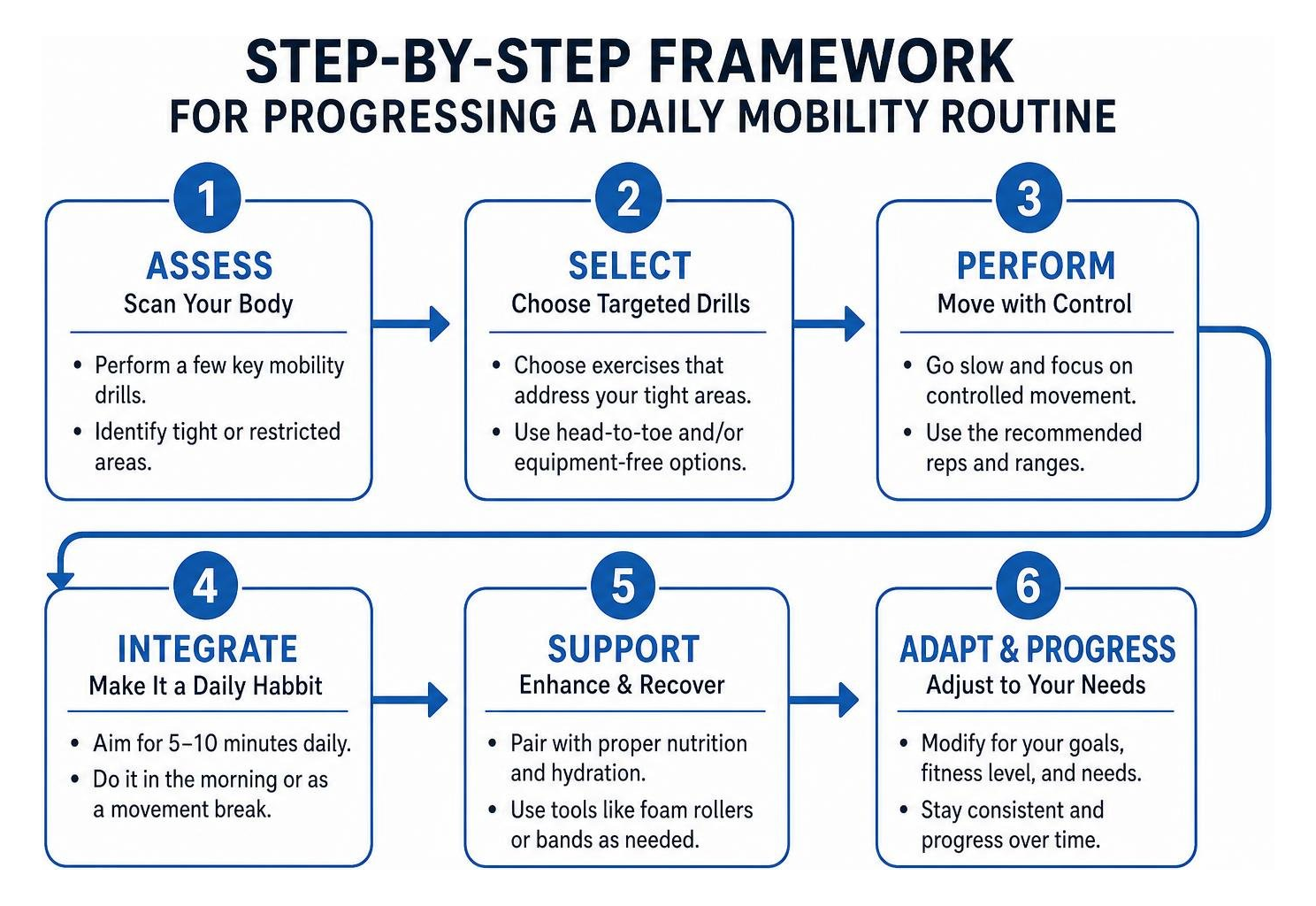
Tailoring Movement for Seniors, Athletes, and Recovery Needs
Mobility training can be modified to serve diverse physical needs across all stages of life:
- Older Adults: Maintaining ankle and hip mobility improves balance and directly reduces fall risk. Research shows that simple functional tasks such as stair climbing can improve lower-body strength and aerobic capacity in older adults while remaining accessible. Gentle seated routines using arm circles, ankle rotations, and chair squats help preserve daily independence.
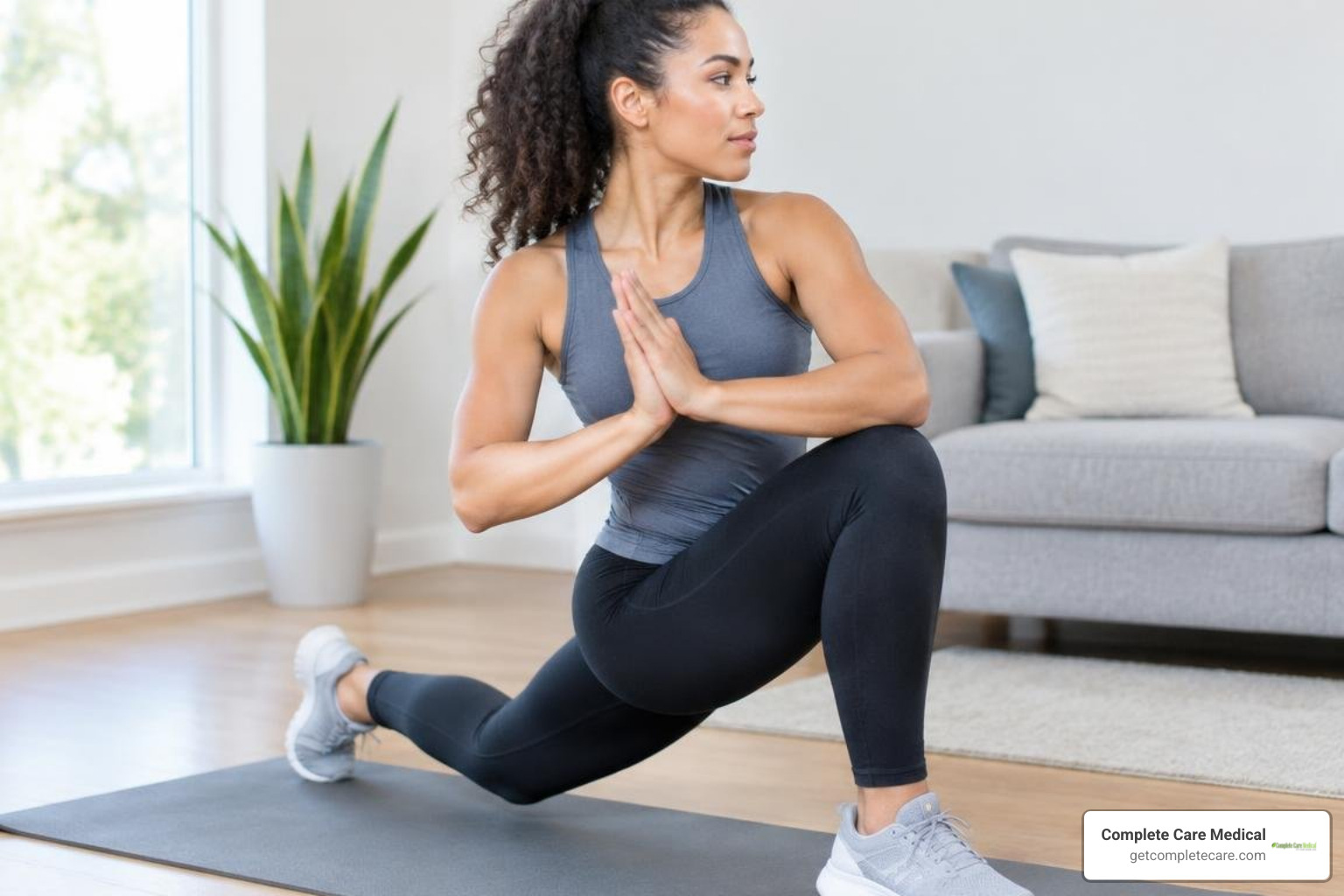
- Athletes: High-impact training demands joint durability. Athletes benefit from dynamic hip-flexor lunges, deep squat holds, and thoracic rotations prior to training to expand usable power and minimize soft-tissue strains.
- Cancer Recovery & Chronic Illness: During post-treatment recovery, gentle movement reduces fatigue and soft-tissue tightness. Resources like Safe Mobility Exercises During Cancer Recovery emphasize working within a pain-free range with light shoulder rolls and gentle spine mobilization.
- Adaptive Movement & Spinal Cord Injury: Wheelchair users and individuals with neurological conditions can utilize adaptive seating drills, gentle arm raises, and guided breathing. In a recent study, researchers found that individuals with spinal cord injury who practiced adaptive yoga showed significant improvements in emotional and mental health, including fewer incidents of depression after just six weeks of twice-weekly sessions. Learn more about practical modifications with our guide on how to stay active and safe with limited mobility.
Recognizing Movement Limitations and Knowing When to Seek Care
While mild tightness is normal when beginning a routine, certain symptoms warrant professional medical evaluation:
- Persistent joint swelling, redness, or heat
- Sharp, stabbing pain during movement
- Sudden joint locking, catching, or giving way
- Discomfort that persists or worsens after 3 to 4 weeks of gentle movement
At Complete Care Medical, we are dedicated to supporting your functional wellness journey with high-quality health supplies, educational resources, and personalized care. If movement limitations interfere with your daily life, work with a physical therapist or qualified medical professional to create a customized rehabilitation plan. Discover our complete selection of wellness products and guides by visiting our health and wellness resources to keep your body moving comfortably every day.