









 800.503.7604
Understanding How to Install External Catheters for Men
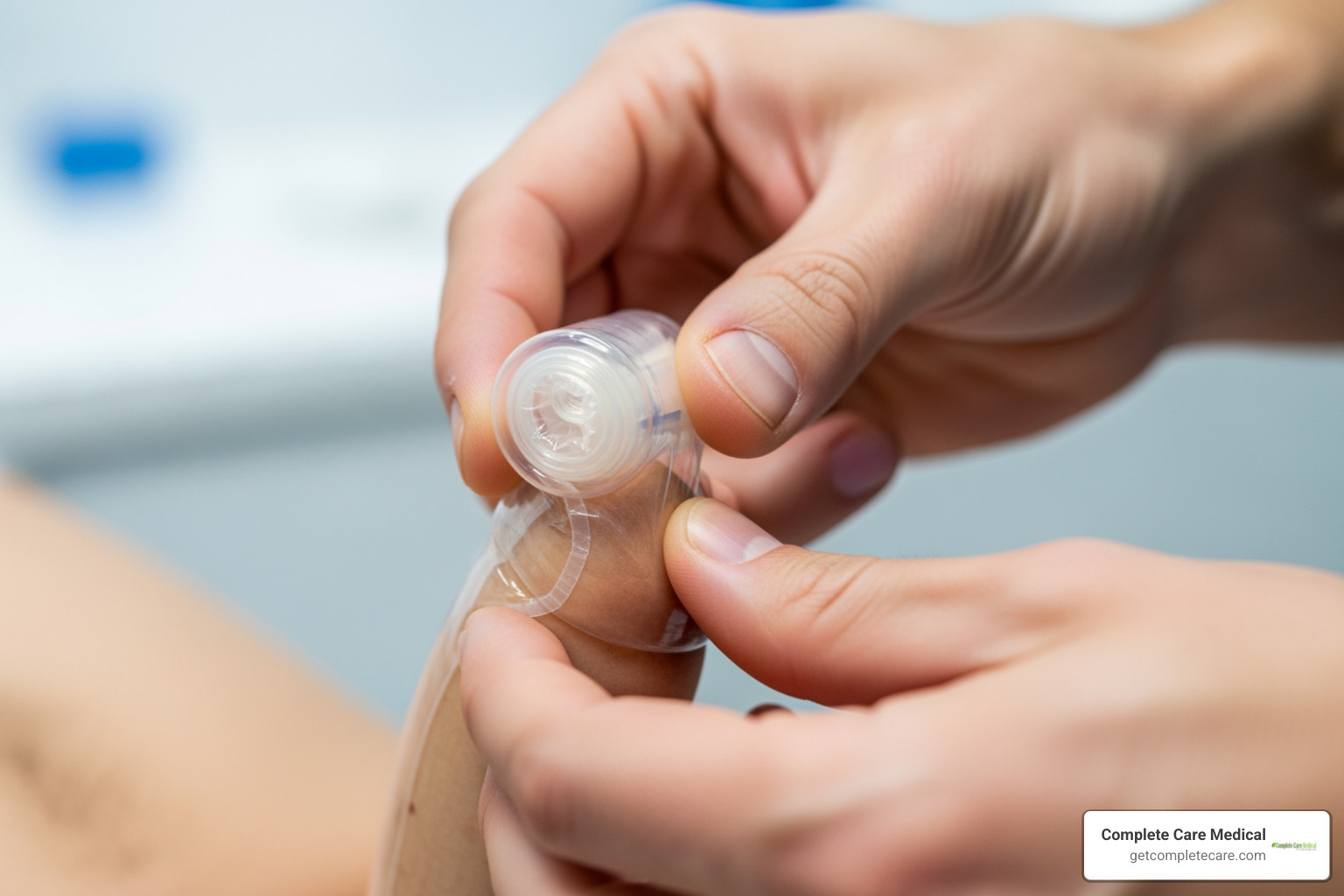
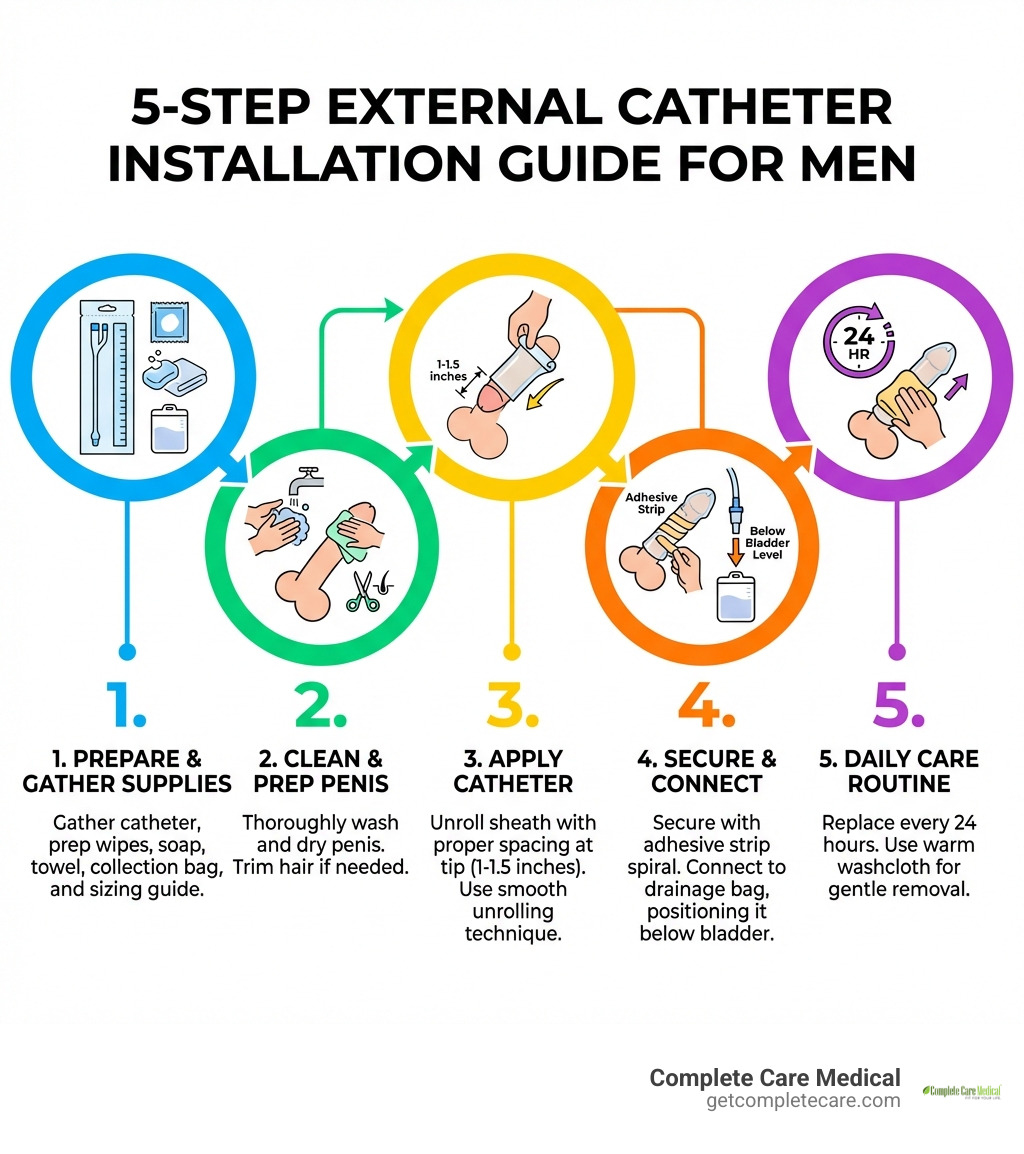
How to install external catheters for men involves five main steps: gathering supplies, cleaning and drying the penis, applying the catheter, securing it, and connecting it to a drainage bag. Here's a quick overview:
Quick Installation Steps:
- Prepare - Wash hands and gather your catheter (correct size), skin prep wipes, collection bag, soap, and towel.
- Clean - Wash and completely dry the penis. Trim pubic hair if it interferes with adhesion.
- Apply - Unroll the catheter sheath down the penis shaft, leaving a small space at the tip.
- Secure - Use the self-adhesive or a separate strip to seal the catheter without restricting circulation.
- Connect - Attach the drainage tubing to a collection bag, keeping it below bladder level.
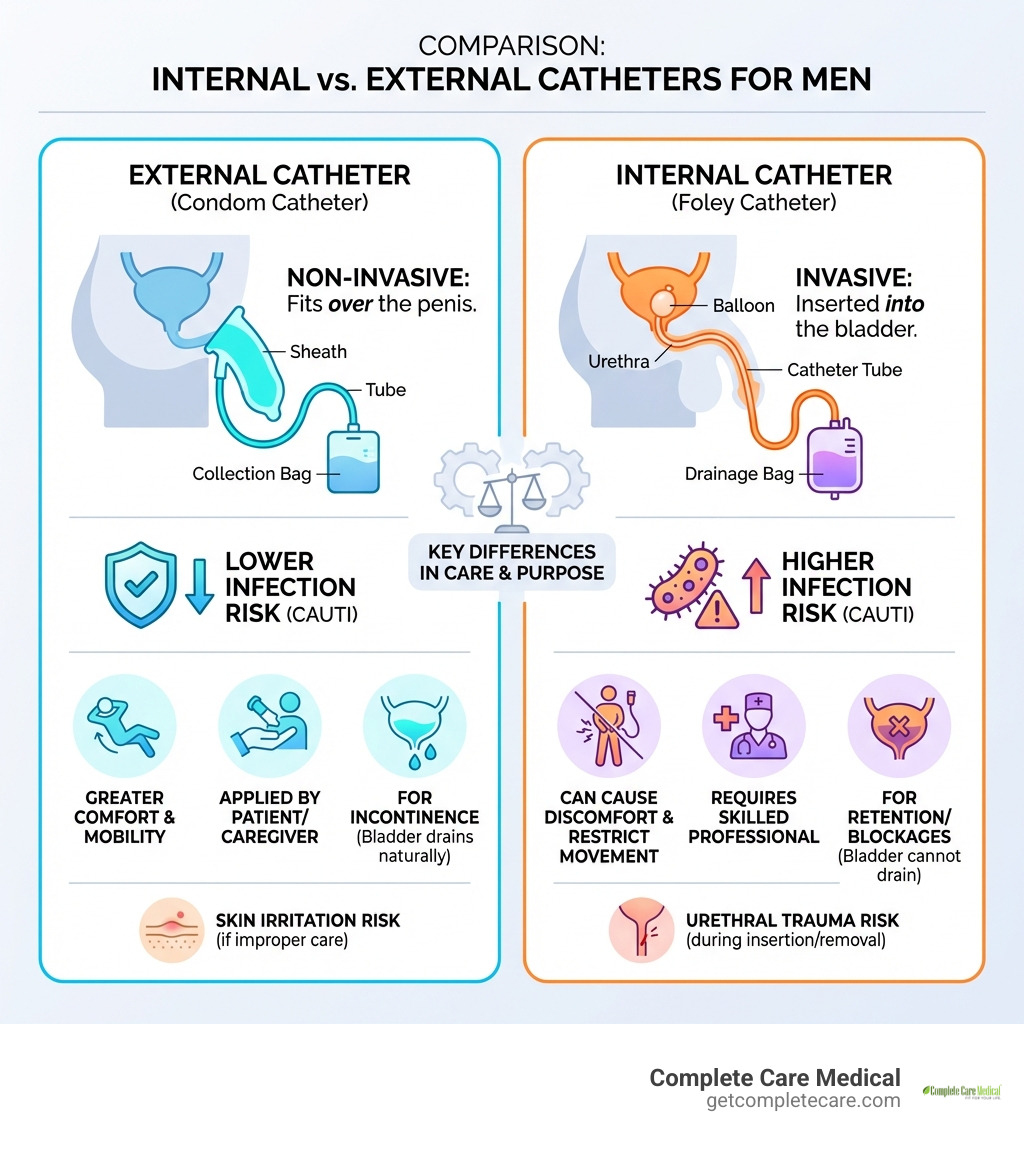
External catheters, also called condom or Texas catheters, are a non-invasive way to manage urinary incontinence. Unlike internal catheters that go inside the body, these devices fit over the penis like a sheath to collect urine. They are often preferred for their comfort, freedom of movement, and lower risk of urinary tract infections (UTIs). They are ideal for men who can drain their bladder but have trouble with control due to incontinence, mobility issues, or dementia.
Getting the application right is key to preventing leaks and skin irritation. With the right technique, most men or their caregivers can master the process.
External vs. Internal Catheters
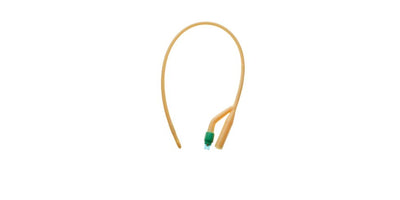
Internal (Foley and Intermittent) catheters are inserted into the bladder for urinary retention and are either kept in place for a time (Foley) or single use and inserted then disposed of after drainage (intermittent). In contrast, external catheters are a less invasive, more comfortable alternative for managing incontinence, with a significantly lower infection risk when bladder function is otherwise normal.
Here’s a quick comparison:
| Feature | External Catheters (Condom) | Internal Catheters (Foley) |
|---|---|---|
| Invasiveness | Non-invasive; fits over the penis | Invasive; inserted into the bladder |
| CAUTI Risk | Lower risk of UTIs | Higher risk of UTIs |
| Comfort | More comfortable, less restrictive | Can cause discomfort and spasms |
| Mobility | Allows greater mobility | May limit mobility |
| Application | Applied by user or caregiver | Requires a healthcare professional |
| Skin Issues | Risk of skin irritation if not cared for | Risk of urethral trauma or irritation |
| Usage | For incontinence with normal bladder drainage | For urinary retention or blockages |
At Complete Care Medical, we help you find the right solutions and understand Medical Conditions That Cause Incontinence: Men Versus Women to ensure you receive the best care.
How to Install External Catheters for Men: A Step-by-Step Guide
Proper application is key to comfort and effectiveness. Here, we break down how to install external catheters for men into simple steps.
Step 1: Gathering Supplies and Choosing the Right Size
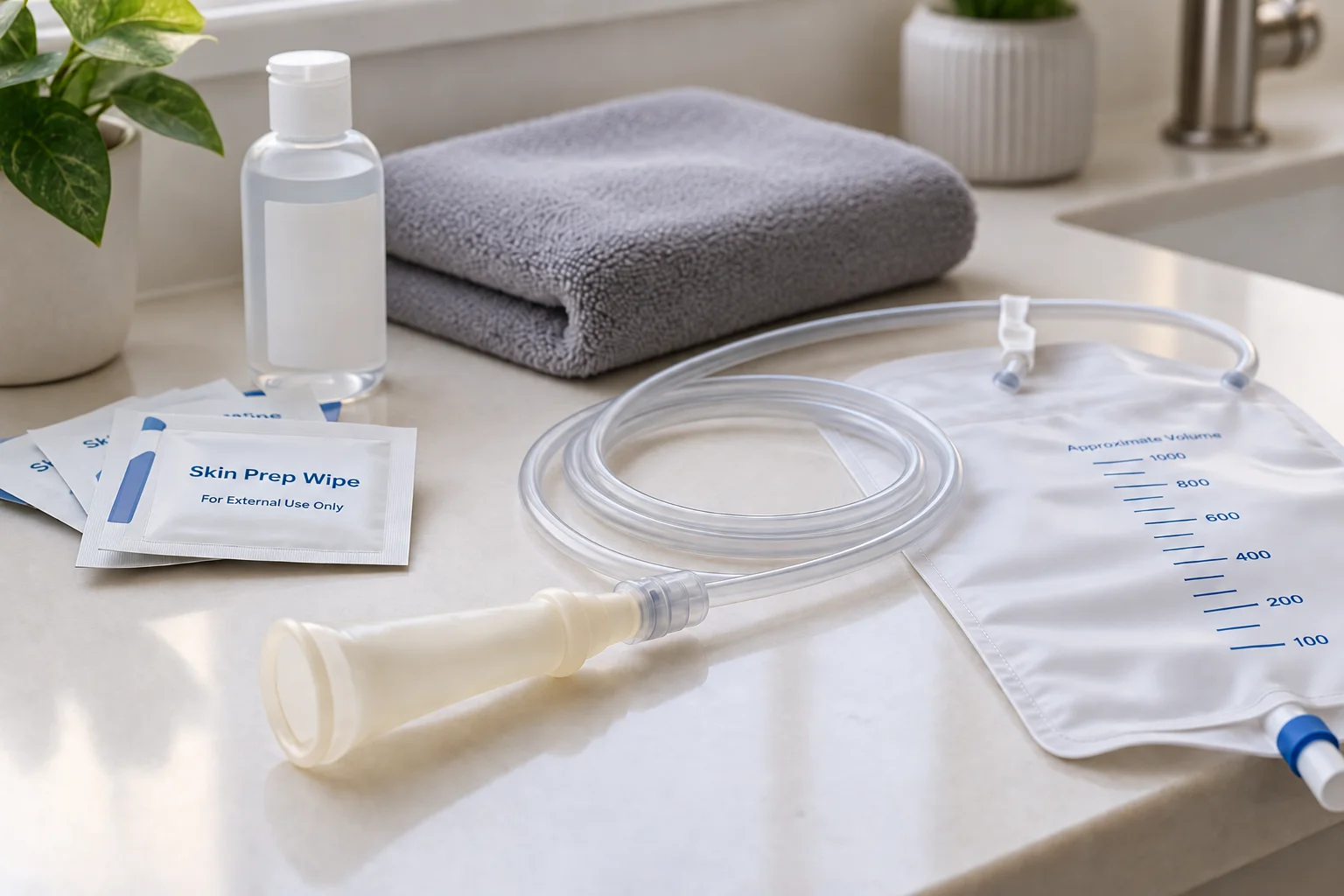
Gather all necessary items to ensure a smooth, hygienic process.
List of necessary supplies:
- External Catheter (correct size)
- Skin Prep Wipes or Barrier
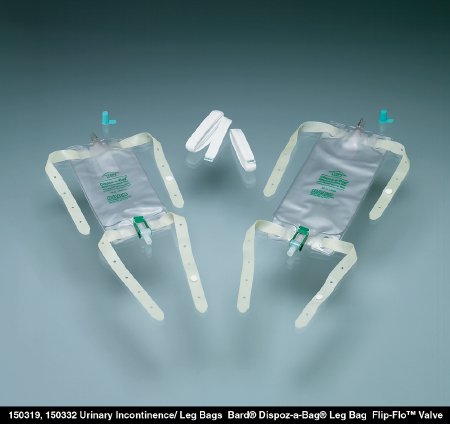
- Collection Bag (leg or bedside)
- Extension Tubing (if needed)
- Mild Soap and Water
- Washcloth and Towel
- Scissors (for trimming hair)
Sizing Importance: A correct fit is crucial to prevent leaks and discomfort. Use a manufacturer's sizing guide to measure the penis shaft's diameter, not length. If between sizes, choose the smaller one for a snug fit. Common sizes range from Small (25 mm) to Extra Large (41 mm).
Catheter Materials: Catheters are usually made of silicone or latex. Silicone is breathable, hypoallergenic, and ideal for sensitive skin or those with latex allergies. Our guide on What You Need to Know About the Different Types of Catheters offers more detail.
Step 2: The Correct Way to Install External Catheters for Men
Preparation:
- Wash Hands: Wash your hands thoroughly with soap and water.
- Prepare the Area: Trim any interfering pubic hair. Wash the penis with mild soap and water, then dry it completely, as moisture prevents proper adhesion.
- Use Skin Protectant: Apply a skin barrier wipe to the penis shaft and let it dry completely. This protects the skin and helps the adhesive stick.
Application:
- Position the Catheter: Place the rolled catheter on the penis tip, leaving a 1/2-inch space at the end to prevent irritation and ensure urine flow.
- Unroll Smoothly: Gently unroll the catheter down the penis shaft, smoothing any wrinkles as you go.
- For Uncircumcised Men: Keep the foreskin in its natural, forward position before applying. Do not retract it, as this can cause swelling and pain.
Step 3: Securing the Catheter and Connecting the Drainage Bag
Securing Methods:
- Self-Adhesive: For catheters with built-in adhesive, gently press for 10-15 seconds to create a secure seal.
- Adhesive Strips: For non-adhesive types, wrap a separate strip spirally around the shaft. Never wrap too tightly, as this can restrict blood flow. The wrap should be snug, not constricting.
Connecting the Drainage Bag:
- Choose a Bag: Use a leg bag for daytime mobility and a larger bedside bag for overnight use. Learn more in our guide to Urinary Drainage and Leg Bag Care: What You Need to Know.
- Connect and Position: Attach the catheter to the drainage bag's tubing. Always keep the bag below bladder level to prevent urine backflow.
- Secure Tubing: Secure the tubing to your leg with straps, leaving some slack to avoid pulling on the catheter.
Step 4: Daily Care, Removal, and Best Practices
A consistent daily routine is essential for preventing complications.
Daily Routine:
- Change Daily: Replace the catheter every 24 hours.
- Wash Skin: Wash and dry the penis thoroughly with each catheter change.
- Empty Bag: Empty the collection bag when it is about half full to prevent its weight from pulling on the catheter.
Safe Removal:
- Loosen Adhesive: To remove, apply a warm, wet washcloth over the catheter for 30 seconds to loosen the adhesive.
- Roll Off Gently: Gently roll the catheter off the penis; never pull or yank it.
- Clean Residue: Use a medical adhesive remover for any residue, then wash the skin.
Cleaning the Collection Bag: To clean a reusable bag, rinse it with water, then soak it for 20-30 minutes in a solution of one part white vinegar to three parts water. Rinse again and let it air dry.
Following these practices is vital for your health. For more tips, see our guide on Best Health Practices for Catheter Use.
Troubleshooting, Complications, and Getting Your Supplies
Even with careful application, issues can arise. Here’s how to troubleshoot common problems and when to seek medical advice.
Tips for Avoiding Common Problems with External Catheters
- Leakage: Often caused by an incorrect size, wet skin, or wrinkles in the sheath. Re-measure for the correct size and ensure a smooth, dry application.
- Skin Irritation: Can be caused by a latex allergy, trapped moisture, or a fit that is too tight. Switch to a silicone catheter, use skin barrier wipes, and ensure the catheter is not restricting blood flow.
- Catheter Falling Off: Usually due to incorrect sizing, pubic hair, or oily skin. Confirm your size, trim hair, and apply only to clean, dry, lotion-free skin.
For a deeper dive, check out our article on 3 Common Catheter Issues and How to Fix Them.
When to Call a Doctor
While external catheters are safe, contact a healthcare professional if you experience any of the following:
- Signs of a UTI: Fever, chills, cloudy or foul-smelling urine, blood in urine, or pain. For more on risks, see this guide on Urinary catheterisation: Risks.
- Severe Skin Issues: Persistent redness, open sores, blisters, or skin breakdown on the penis.
- Pain or Swelling: Any significant pain, discomfort, or swelling of the penis.
- No Urine Output: If no urine has drained into the bag for six hours or more.
At Complete Care Medical, we simplify the process of obtaining insurance-covered medical supplies. Our knowledgeable team provides personalized service to ensure you get the right products and support. For a comprehensive overview, see Everything You Need to Know About Urinary Catheters.