







 800.503.7604
How Can You Enjoy Thanksgiving Dinner While Managing Diabetes?
You can enjoy Thanksgiving dinner while managing diabetes by eating a high-protein, high-fiber breakfast, using the Diabetes Plate Method to fill half your plate with non-starchy vegetables, a quarter with lean turkey, and a quarter with your favorite carbohydrate, and taking a 15- to 30-minute walk after the meal. These steps help keep blood sugar in a safer target range without requiring you to skip the dishes you love.
For nearly 40 million Americans living with diabetes—and the more than 6 million adults who have undiagnosed type 2 diabetes—holiday gatherings can bring dietary anxiety. A table filled with stuffing, sweet potatoes, buttery rolls, gravy, and pie can make it feel like the only options are deprivation or frustrating glucose spikes.
Managing diabetes on Thanksgiving does not mean eating plain lettuce while everyone else celebrates. Healthy holiday eating is built on moderation, planning, and stress management—not rigid perfection. The goal is not a perfectly flat glucose line, but staying in your recommended range as much as possible while enjoying the fellowship and flavors of the season.
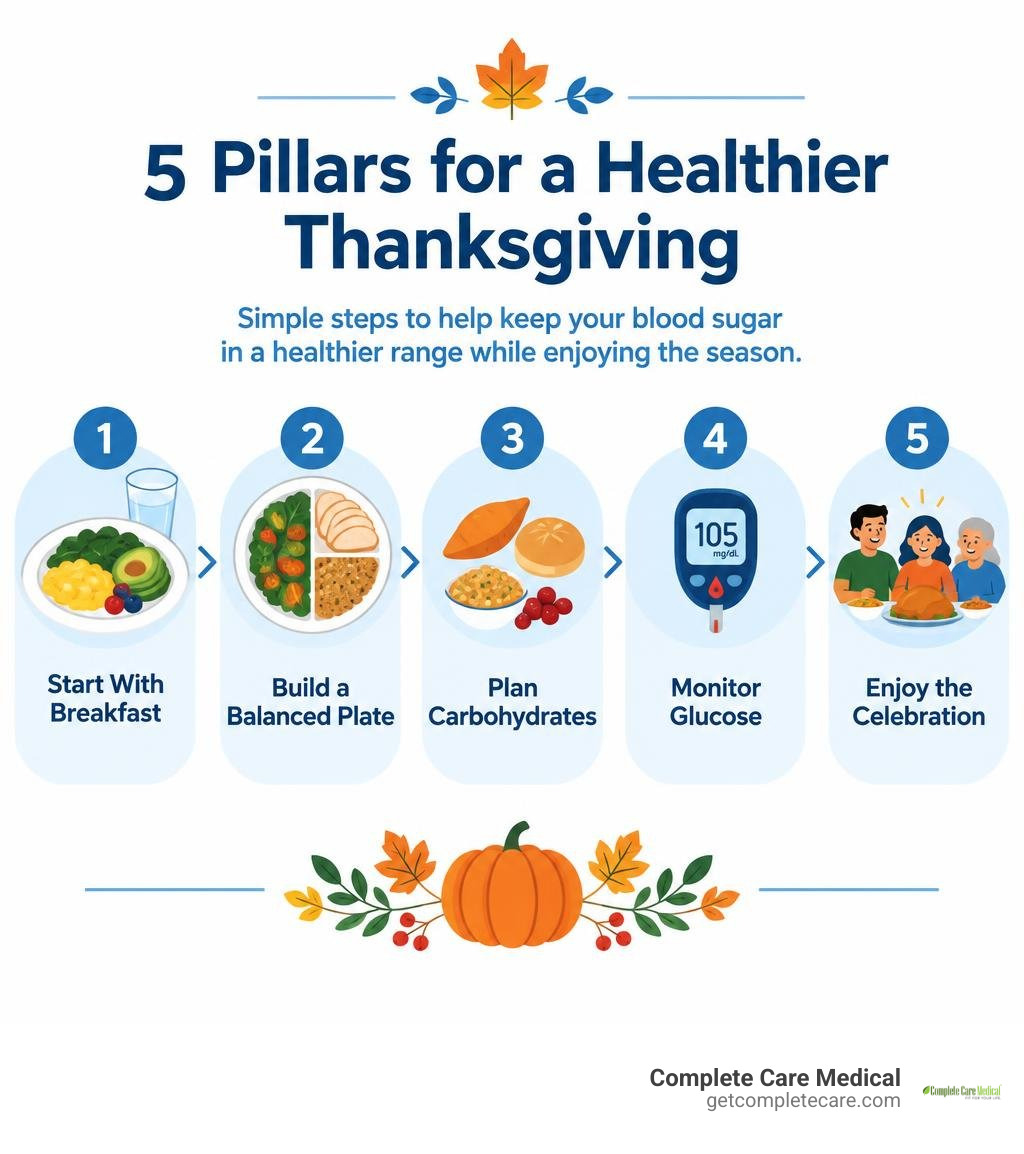
One common mistake is skipping breakfast to “save calories” or “bank carbs.” That can backfire because extended fasting may prompt the liver to release stored glucose, increase cravings, weaken portion awareness, and raise hypoglycemia risk for people using insulin or certain oral medications.
Instead, start Thanksgiving morning with lean protein and fiber, such as scrambled eggs with spinach and avocado, or unsweetened Greek yogurt with chia seeds and walnuts. A steady breakfast helps stabilize appetite and sets a calmer tone for the meal ahead.
How Should You Plan Portions, Count Carbohydrates, and Swap Traditional Dishes?
When dinner is served buffet-style, take a quick lap around the spread before filling your plate. Decide which signature dishes you truly love and which ones you can skip. As noted in Thanksgiving makeover: 7 diabetes-friendly tips & food swaps from Endeavor Health, planning ahead lets you enjoy holiday traditions while keeping your glycemic load more balanced.
Visual Portion Control with the Diabetes Plate Method
Use a standard 9-inch dinner plate to create simple visual boundaries:
- Fill 50% of your plate with non-starchy vegetables: Choose green beans, roasted Brussels sprouts, cauliflower, asparagus, or salad with olive oil and vinegar. Fiber helps slow digestion and blunt glucose rises.
- Fill 25% with lean protein: Choose 3 to 4 ounces of skinless roasted turkey breast. Turkey is carb-free and helps promote fullness.
- Fill 25% with carbohydrates: Reserve this space for your favorite starch, such as herbed stuffing, mashed sweet potatoes, or a dinner roll.
Eating vegetables and protein first, followed by starches, may reduce post-meal glucose surges. For everyday meal planning, explore these healthy food options for diabetics.
Carbohydrate Counts in Traditional Thanksgiving Favorites
For insulin dosing or medication planning, focus on total carbohydrates, not just added sugar. Starches also digest into glucose. According to Franciscan Health's Thanksgiving Dinner Planning Tips, holiday recipes can vary widely:
| Thanksgiving Dish | Standard Serving Size | Traditional Carb Count | Diabetes-Friendly Swap Carb Count | Estimated Calorie Savings |
|---|---|---|---|---|
| Roast Turkey Breast | 3–4 oz, skinless | 0g | 0g, herb-roasted | ~40 kcal vs. fried/skin-on |
| Herbed Bread Stuffing | 1/2 cup | 22–25g | 12–15g, quinoa or wild rice blend | ~60 kcal |
| Mashed Potatoes & Gravy | 1/2 cup | 20–25g | 8–10g, 50/50 cauliflower-potato mash | ~75 kcal |
| Sweet Potato Casserole | 1/2 cup | 35–45g | 15–18g, roasted with cinnamon/pecans | ~120 kcal |
| Cranberry Sauce | 1/4 cup | 28g | 6g, fresh orange-zest relish | ~80 kcal |
| Green Bean Casserole | 1/2 cup | 15–18g | 6–8g, green beans almondine | ~120 kcal |
| Dinner Roll | 1 roll | 15–20g | 4–6g, cauliflower breadstick or skip | ~90 kcal |
| Pumpkin Pie | 1 slice | 35–45g | 13–15g, crustless pumpkin custard | ~200 kcal |
| Pecan Pie | 1 slice | 65–75g | 20–25g, mini pecan tartlet | ~250 kcal |
Smart Ingredient Swaps for Holiday Classics and Desserts
Small recipe changes can reduce carbohydrates, sodium, and saturated fat while keeping familiar flavors:
- Lighter mashed potatoes: Blend steamed cauliflower 50/50 with Yukon Gold potatoes, unsweetened almond milk, and roasted garlic.
- Fresh cranberry-citrus relish: Replace canned cranberry sauce with fresh cranberries, orange zest, cinnamon, and a non-nutritive sweetener such as monk fruit or stevia.
- Upgraded green beans: Use reduced-fat mushroom soup, or skip the casserole and toss fresh green beans with olive oil, sliced almonds, and lemon.
- Smarter desserts: Try crustless pumpkin pie sweetened with erythritol or mini tartlets, as featured in Your Diabetes-Friendly Holiday Toolkit from the American Diabetes Association. You get the warm spices and texture with fewer carbohydrates.
How Can You Monitor Glucose, Stay Active, and Handle Post-Meal Spikes?
Thanksgiving meals often stretch across hours, with appetizers, dinner, dessert, and grazing blending together. Proactive glucose checks and light activity help you respond early. To support general wellness alongside balanced meal planning, you can also explore Complete Care medical nutritional products.
Blood Glucose Monitoring and Insulin Timing Around the Feast
When routines change, glucose trends matter. Consider this Thanksgiving monitoring cadence:
- Fasting morning check: Confirm your baseline when you wake up.
- Pre-meal test: Check before eating to guide choices and insulin dosing.
- 1 to 2 hours post-meal: See how the meal affected your glucose.
- Bedtime check: Guard against delayed lows, especially if you drank alcohol.
If you use a CGM, understanding continuous glucose monitoring trends can help you see the delayed effect of mixed meals. If you take mealtime insulin, remember that high-fat meals can slow digestion. A full bolus before a rich feast may cause an early drop followed by a later spike. Ask your endocrinologist whether split-bolus or extended-bolus strategies are appropriate for you.
If you travel, pack extra strips, lancets, backup medications, and diabetes supplies. For a refresher on target ranges and basics, review this guide to diabetes 101.
Incorporating Movement and Navigating Holiday Alcohol

Physical activity is one of the most useful tools for limiting post-meal spikes because working muscles absorb glucose from the bloodstream.
- Morning activity: A Turkey Trot, brisk walk, or light resistance workout can increase insulin sensitivity for the day.
- Post-dinner walk: Instead of moving straight to the couch, invite family for a 15- to 30-minute stroll. It aids digestion, reduces grazing, and may flatten glucose spikes. For more seasonal ideas, see these tips for staying healthy and active during the holiday season.
Use caution with alcohol. Your liver prioritizes metabolizing alcohol, which can suppress glucose release and trigger delayed hypoglycemia for up to 12 hours. Never drink on an empty stomach. Choose lower-sugar options such as dry wine, light beer, or a wine spritzer, and limit intake to one standard drink per day for women or two for men. For broader beverage advice, review this guide to seasonal health during the holidays.
Recovering from High Blood Sugar and Handling Social Pressure
If your blood sugar rises above your target range after dinner, avoid panic:
- Hydrate with water to support normal kidney function.
- Move gently with 10 to 15 minutes of easy walking or stretching.
- Avoid “rage bolusing” because stacked rapid-acting insulin can cause rebound hypoglycemia. Use only correction doses recommended by your healthcare provider.
- Check ketones if indicated if you have type 1 diabetes and glucose remains above 240–250 mg/dL.
If relatives push seconds or comment on your plate, keep the response simple: “Everything looks incredible, but I’m completely satisfied right now. I’d love to take a small portion home for tomorrow.”
One celebratory meal does not define your diabetes management. Give yourself grace, enjoy your family, and return to your normal routine the next morning.