











 800.503.7604
Why B-Complex for Metabolism Is More Important Than Most People Realize

B-complex for metabolism is not just a marketing phrase; it describes a real, well-documented biological relationship. Your body relies on all eight B vitamins to convert the food you eat into usable energy every single day.
Quick answer: How does B complex support metabolism?
| B Vitamin | Key Metabolic Role |
|---|---|
| B1 (Thiamine) | Converts carbohydrates into energy; supports nerve function |
| B2 (Riboflavin) | Powers the electron transport chain; aids fat and protein breakdown |
| B3 (Niacin) | Critical for the Krebs cycle and ATP production |
| B5 (Pantothenic Acid) | Forms coenzyme A, essential for fat and carbohydrate metabolism |
| B6 (Pyridoxine) | Supports protein metabolism and neurotransmitter synthesis |
| B7 (Biotin) | Helps metabolize fatty acids, glucose, and amino acids |
| B9 (Folate) | Supports DNA synthesis and red blood cell formation |
| B12 (Cobalamin) | Maintains myelin, supports red blood cells and energy pathways |
Here is what makes this group of vitamins unique: they are water-soluble, meaning your body does not store them in any meaningful quantity. They are flushed out daily and must be replaced through food or supplements.
B vitamins do not provide energy the way calories do. Think of them like the spark plugs in a car engine; without them, the fuel (carbs, fats, protein) cannot be burned efficiently. A deficiency in even one of these vitamins can slow down the entire process, affecting everything from how your cells produce ATP to how your nervous system functions.
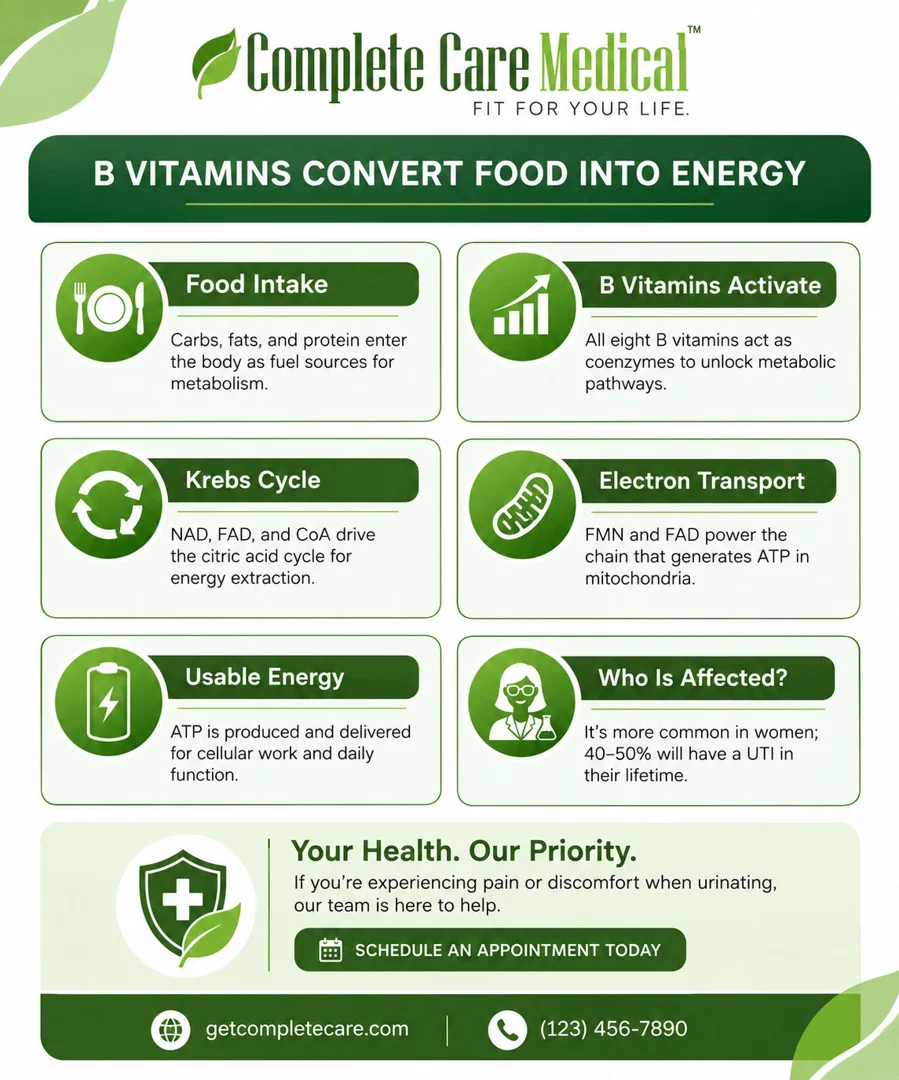
How B-Complex for Metabolism Works in the Body
All eight B vitamins act mainly as coenzymes or cofactors. In plain English, they help enzymes do the chemistry of life: breaking down glucose, oxidizing fat, processing amino acids, making DNA, building red blood cells, and supporting mitochondria. If you want a deeper scientific overview, this research on vitamins and energy metabolism is a solid reference.
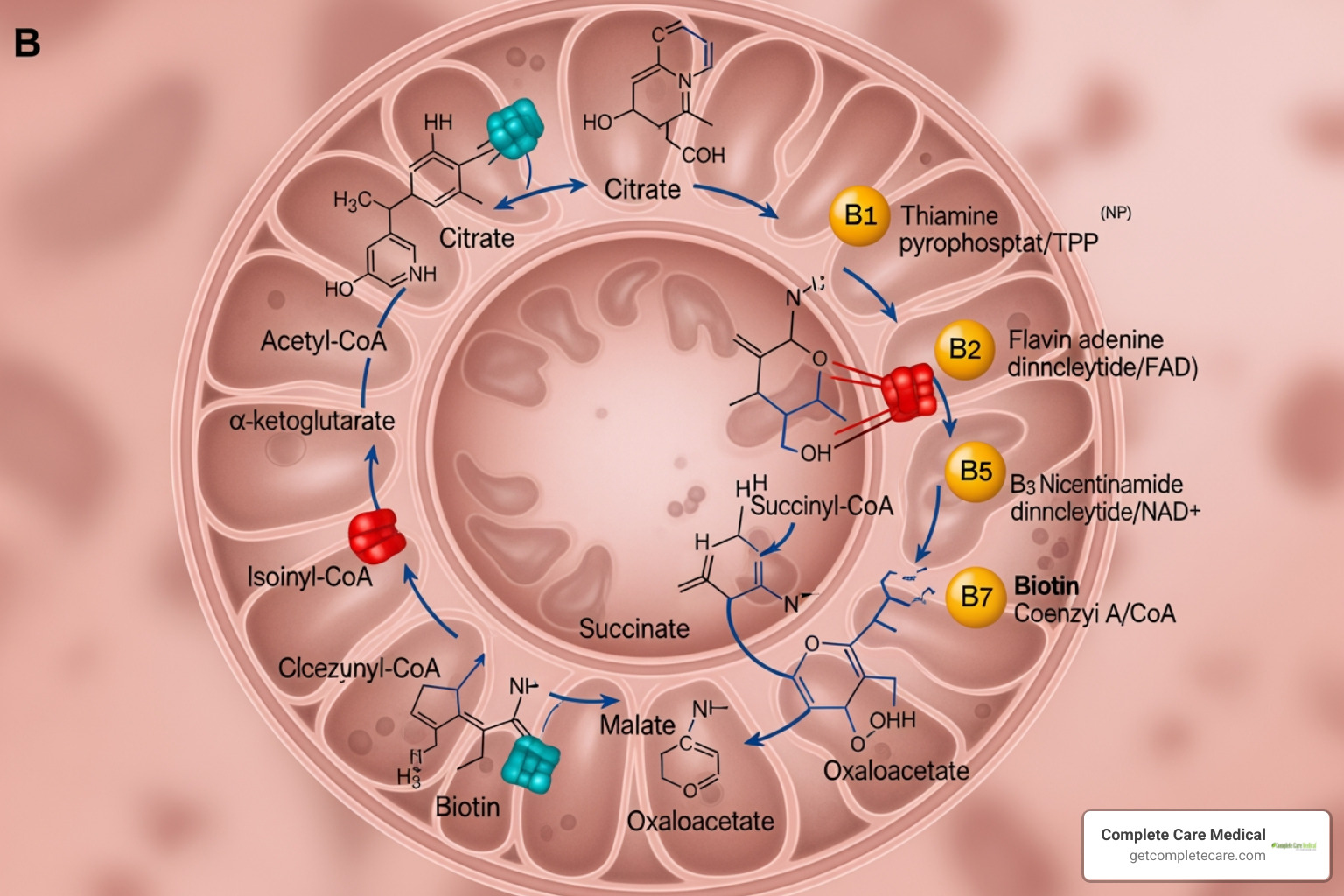
The Eight B Vitamins in B-complex for metabolism
Here is the short version of what each one does:
- B1, thiamine: becomes TPP, which helps pyruvate dehydrogenase and other enzymes move carbohydrate-derived fuel into the Krebs cycle.
- B2, riboflavin: becomes FAD and FMN, two electron carriers used in oxidation-reduction reactions and the electron transport chain.
- B3, niacin: becomes NAD and NADP, which shuttle electrons during glycolysis, beta-oxidation, and the TCA cycle.
- B5, pantothenic acid: part of coenzyme A, essential for making acetyl-CoA, the metabolic crossroads molecule.
- B6, pyridoxine: becomes PLP, needed for amino acid metabolism, transamination, glycogen breakdown, and neurotransmitter synthesis.
- B7, biotin: supports carboxylase enzymes involved in fatty acid synthesis, gluconeogenesis, and amino acid metabolism.
- B9, folate: central to one-carbon metabolism, DNA synthesis, and methylation.
- B12, cobalamin: works with folate in DNA synthesis, supports myelin, and helps convert methylmalonyl-CoA and homocysteine.
Together, these vitamins support both catabolic metabolism, which releases energy from food, and anabolic metabolism, which builds molecules your body needs.
B-Complex for Metabolism in Carbs, Fats, and Protein Pathways
In carbohydrate metabolism, B1 helps move pyruvate toward acetyl-CoA. B2 and B3 carry electrons as fuel is oxidized. B5 helps form acetyl-CoA. In fat metabolism, B2 and B3 are heavily involved in beta-oxidation, while B7 helps manage fatty acid synthesis. In protein metabolism, B6 is the star, helping amino acids get converted into other useful compounds.
Folate and B12 do not directly "burn" calories, but they are crucial for cell division, red blood cell formation, and nervous system health. When they are low, people may feel weak or fatigued because oxygen delivery, DNA synthesis, or nerve function is impaired.
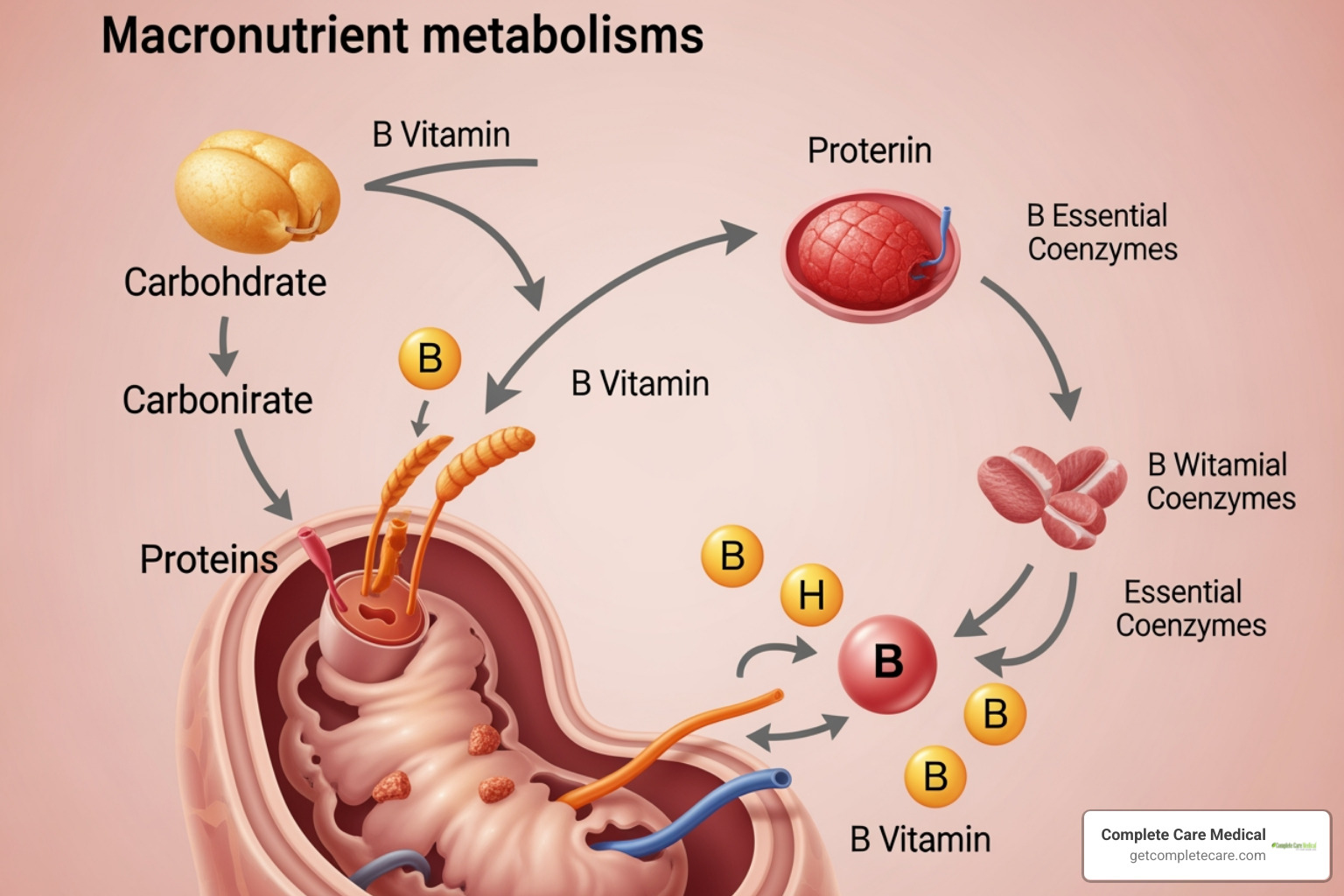
What B-Complex Can and Cannot Do For Energy and Weight Management
What B-complex can do:
- Correct or prevent deficiency
- Support normal energy metabolism
- Help with deficiency-related fatigue
- Support certain medical uses, such as folic acid before pregnancy or riboflavin for migraine prevention
What it cannot do:
- Add calories or create energy from nothing
- Override poor sleep, under-eating, or chronic stress
- Cause meaningful weight loss on its own
- "Speed up" metabolism if your vitamin status is already adequate
The evidence is mixed for performance or weight-loss benefits in healthy, well-nourished adults. Some studies suggest benefits in people with low intake or higher demands, but supplementation is not a magic shortcut. For a clinical overview, see this research on B vitamins in medicine.
Daily Needs, Food Sources, Deficiency Risks, and Interactions
Because B vitamins are water-soluble, regular intake matters. Older adults, vegans, pregnant women, people with alcohol use disorder, and those with malabsorption issues deserve extra attention.
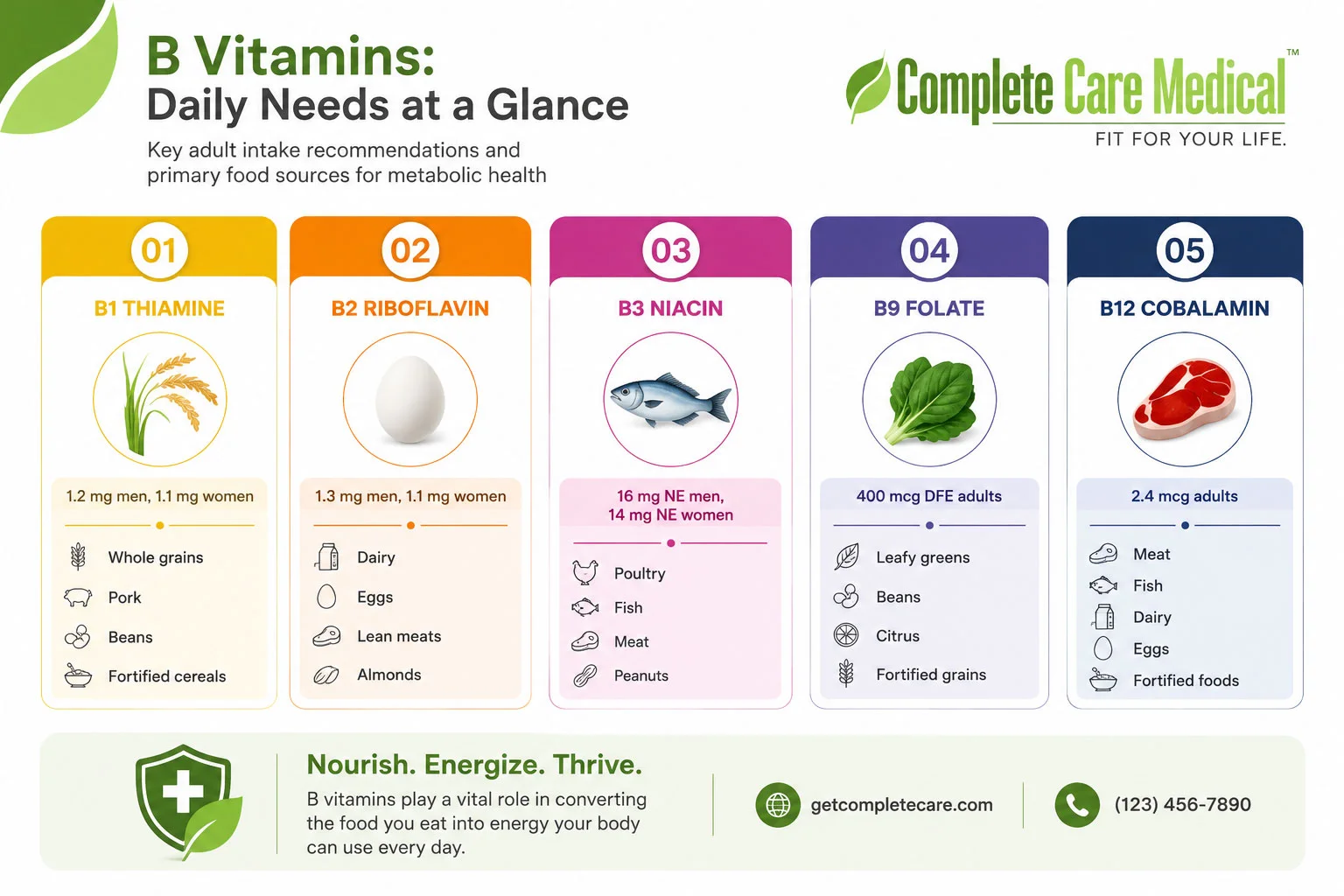
Recommended daily intakes and top food sources for each B vitamin
Below is a practical summary for adults:
| B Vitamin | Men | Women | Pregnancy | Good Food Sources |
|---|---|---|---|---|
| B1 thiamine | 1.2 mg | 1.1 mg | 1.4 mg | whole grains, pork, beans, fortified cereals |
| B2 riboflavin | 1.3 mg | 1.1 mg | 1.4 mg | dairy, eggs, lean meats, almonds |
| B3 niacin | 16 mg NE | 14 mg NE | 18 mg NE | poultry, fish, meat, peanuts |
| B5 pantothenic acid | 5 mg | 5 mg | 6 mg | meat, mushrooms, avocados, legumes |
| B6 pyridoxine | 1.3 mg | 1.3 mg | 1.9 mg | fish, potatoes, bananas, chickpeas |
| B7 biotin | 30 mcg | 30 mcg | 30 mcg | eggs, nuts, seeds, salmon |
| B9 folate | 400 mcg DFE | 400 mcg DFE | 600 mcg DFE | leafy greens, beans, citrus, fortified grains |
| B12 cobalamin | 2.4 mcg | 2.4 mcg | 2.6 mcg | meat, fish, dairy, eggs, fortified foods |
A mixed diet usually covers most needs, but B12 is a special case because it is naturally found mainly in animal foods. Vegans often need fortified foods or supplements. For more on product types, visit our guide to B-complex support.
Deficiency Symptoms, High-Risk Groups, and Medication Interactions
Deficiency symptoms can look vague at first: fatigue, brain fog, irritability, mouth soreness, numbness, tingling, and poor exercise tolerance. But some classic deficiency patterns are well known:
- B1 deficiency: beriberi or Wernicke encephalopathy; severe cases can progress to Korsakoff syndrome, especially with chronic alcohol use
- B2 deficiency: ariboflavinosis, cracked lips, glossitis, dermatitis
- B3 deficiency: pellagra, remembered by the "3 Ds" - dermatitis, diarrhea, dementia
- B6 deficiency: anemia, dermatitis, neuropathy, seizures in severe cases
- B7 deficiency: rash, hair thinning, neurologic symptoms; raw egg white overuse is a classic risk because avidin binds biotin
- B9 deficiency: megaloblastic anemia, elevated homocysteine; low folate in early pregnancy raises neural tube defect risk
- B12 deficiency: megaloblastic anemia, numbness, gait issues, cognitive changes, myelin damage
High-risk groups include:
- Vegans and strict vegetarians, especially for B12
- Older adults with lower stomach acid or reduced absorption
- People taking metformin, proton pump inhibitors, or H2 blockers
- People using isoniazid or some antiepileptic drugs
- Those with alcohol use disorder
- Patients after bariatric surgery
- People with celiac disease, Crohn's disease, or other malabsorption conditions
- Pregnant women with hyperemesis gravidarum
One important nuance: folate can improve anemia while untreated B12 deficiency continues damaging the nervous system. That is why clinicians often check B12 status before or alongside folate treatment. For a wider lifespan view, see this research on B-complex across the lifespan.
Testing, Treatment, Supplement Safety, and Smart Use of B-Complex for Metabolism
Not every tired person needs a B-Complex. Sometimes the issue is sleep, iron deficiency, thyroid disease, depression, medication effects, or simply life being exciting. Good care starts with the right testing.
How B-Vitamin Deficiencies Are Diagnosed and Treated
Common evaluation tools include:
- CBC to look for anemia patterns
- Serum B12
- Methylmalonic acid and homocysteine for suspected B12 deficiency
- Folate status
- Erythrocyte transketolase activity for thiamine status
- Erythrocyte glutathione reductase activity coefficient for riboflavin status
Evidence-based treatment depends on the vitamin and the cause:
- Suspected Wernicke encephalopathy: thiamine 500 mg IV three times daily for 3 days, then 250 mg IV or IM daily for 5 days or until improvement stops
- Severe alcohol withdrawal or malnutrition risk: prophylactic thiamine 100 mg IV or IM daily for 3 to 5 days
- B12 deficiency: often 1000 mcg IM monthly or 1000 to 2000 mcg orally daily until corrected
- Migraine prevention: riboflavin 400 mg daily for at least 3 months
- Nausea and vomiting in pregnancy: pyridoxine 10 to 25 mg orally every 8 hours
- Neural tube defect prevention: folic acid 0.4 to 0.8 mg daily for women of childbearing age; 4 mg daily if high risk
Special populations need individualized plans:
- Vegans may need regular B12 supplementation long-term
- Older adults may benefit from monitoring due to reduced absorption
- People with malabsorption may need higher oral doses or injections
Safety, Upper Limits, and When Supplements Make Sense
Food-first is usually safest because foods bring fiber, protein, minerals, and lower overdose risk. Supplements make sense when intake is low, needs are higher, absorption is impaired, or a deficiency is confirmed.
Key safety points:
- Vitamin B6 can cause peripheral neuropathy at high doses; the commonly cited US upper limit is 100 mg/day, though some authorities in Europe now use a lower threshold
- Folic acid has an upper limit of 1000 mcg/day from supplements and fortified foods
- Niacin in high doses can cause flushing, itching, and liver toxicity
- Large biotin doses can interfere with lab tests, including troponin and some thyroid tests
- Bright yellow urine from riboflavin is harmless, just visually enthusiastic
When shopping for B-Complex vitamins, we suggest:
- Choose products close to daily needs unless a clinician recommends otherwise
- Be cautious with high-dose B6
- Consider B12 form based on your needs; standard cyanocobalamin is often effective, while some people prefer other forms
- Folate may be listed as folic acid or methylfolate
- Use daily, moderate dosing rather than random megadoses
At Complete Care Medical, we believe supplements should support a real health plan, not replace one. Our broader vitamins and supplements guide can help you think through that decision.
If you want to keep learning, explore our resources on Vitamins and Supplements, B-Complex Pills, Probiotic Thyroid Gut Support, 5 Nutritional Supplements for the Holiday Blues, and A Look at the Top 5 Best Sellers from Complete Care Medicals Nutritional Supplement Line.
In short, B-Complex for metabolism matters because B vitamins help your body unlock energy from food, maintain nerve health, support red blood cells, and keep core metabolic pathways running. They are essential, but not magical. The smart move is targeted, informed use based on diet, symptoms, medical history, and, when appropriate, lab testing.