









 800.503.7604
Why Skin Care for Aging Matters More Than You Think

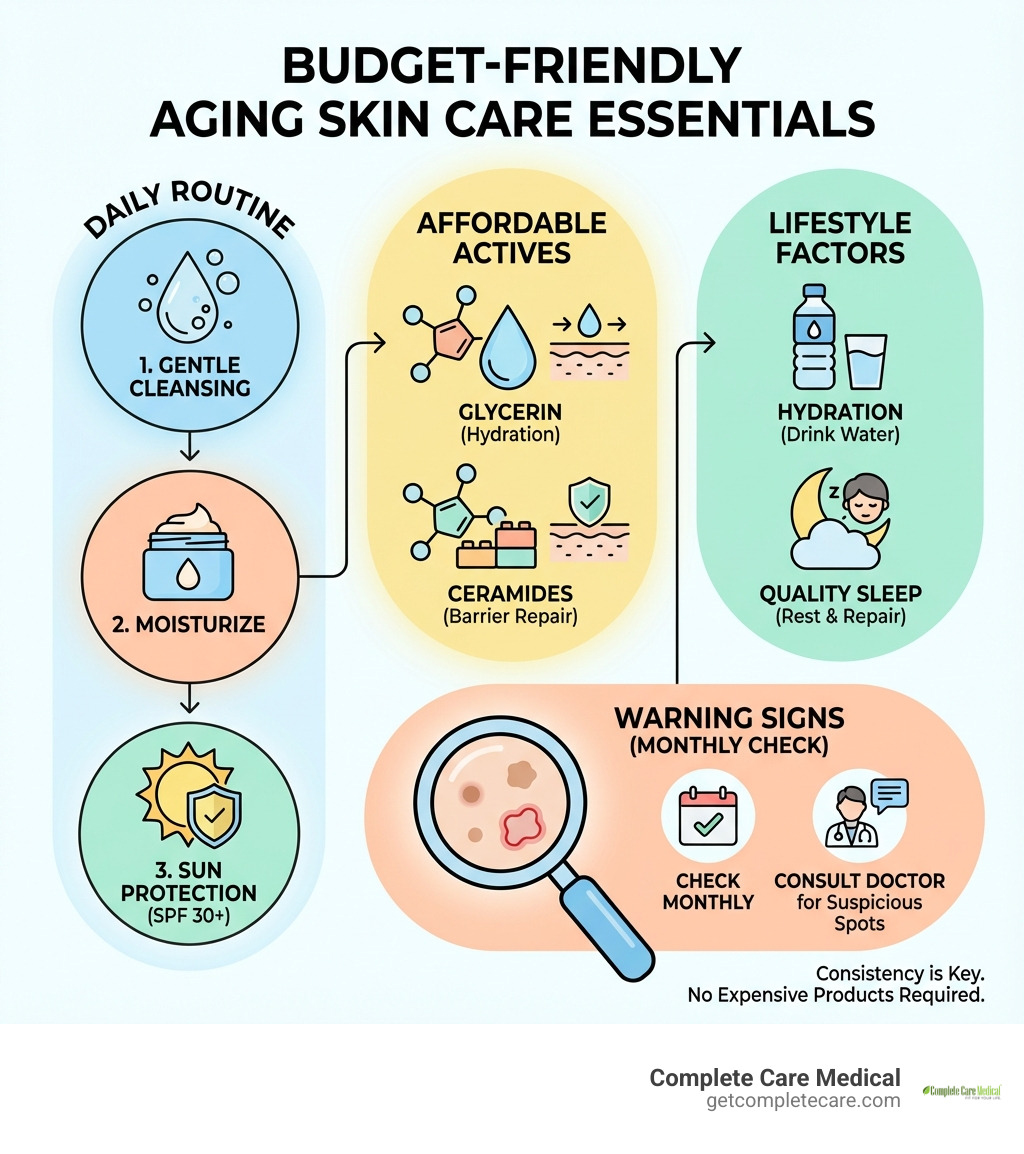
Skin care doesn't have to break the bank. Here's what you need to know:
The Quick Answer:
- Start with three basics: gentle cleanser, moisturizer, and daily sun protection with SPF 30+
- Use affordable ingredients: glycerin, ceramides, and simple antioxidants work just as well as expensive alternatives
- Focus on free habits: hydration, healthy diet, quality sleep, and stress management make a real difference
- Watch for warning signs: check skin monthly for changes and see a doctor for suspicious spots
As we age, our skin naturally loses collagen and elastin, leading to wrinkles and sagging. It also becomes drier, thinner, and more delicate. The good news is that you can address these changes without spending a fortune. Research shows that the most effective anti-aging products are often the most affordable. Dermatologists agree that sunscreen and moisturizer are the two most powerful tools in your arsenal. Meanwhile, lifestyle factors like sun protection and staying hydrated cost nothing but deliver real results.
Expensive doesn't mean better. What matters most is consistency with proven basics and protecting your skin from sun damage, the primary cause of premature aging.
Understanding the Basics of Aging Skin
As we age, our skin's structure changes. The breakdown of collagen and elastin leads to wrinkles and sagging. Skin becomes drier, thinner, and heals more slowly as oil production and cell turnover decrease. Understanding these changes is the first step toward effective skin care.

Intrinsic Aging
Intrinsic aging is the natural process dictated by genetics, resulting in fine wrinkles, thinner skin, and a loss of elasticity over time.
Extrinsic Aging
Extrinsic aging is caused by external factors that accelerate the aging process. The main culprit is sun exposure (photoaging), but smoking and pollution also contribute to deeper wrinkles and uneven skin tone.
How Menopause Specifically Affects the Skin
Menopause causes a significant drop in estrogen, a hormone vital for skin hydration and collagen. As estrogen declines, skin becomes thinner, drier, and less firm, making dedicated skin care during this time especially important.
Your Essential Guide to Skin Care for Aging on a Budget
Effective skin care should be accessible to everyone. The good news is that some of the most impactful strategies are also the most affordable. Let's explore how to build a powerful, budget-friendly routine.
The Foundational Three: Your Core Anti-Aging Routine
Dermatologists agree that the most effective anti-aging routine is built on three simple steps: gentle cleansing, moisturizing, and sun protection.
Gentle Cleansing: Aging skin is often drier and more delicate. Use a mild, fragrance-free cleanser once daily (usually in the evening) to remove impurities without stripping natural oils. In the morning, a splash of water may be sufficient.
Hydrating Moisturizers: Daily moisturizing is crucial for locking in hydration and minimizing the appearance of fine lines. Look for effective ingredients like glycerin, ceramides, and hyaluronic acid. Apply to damp skin to trap moisture.
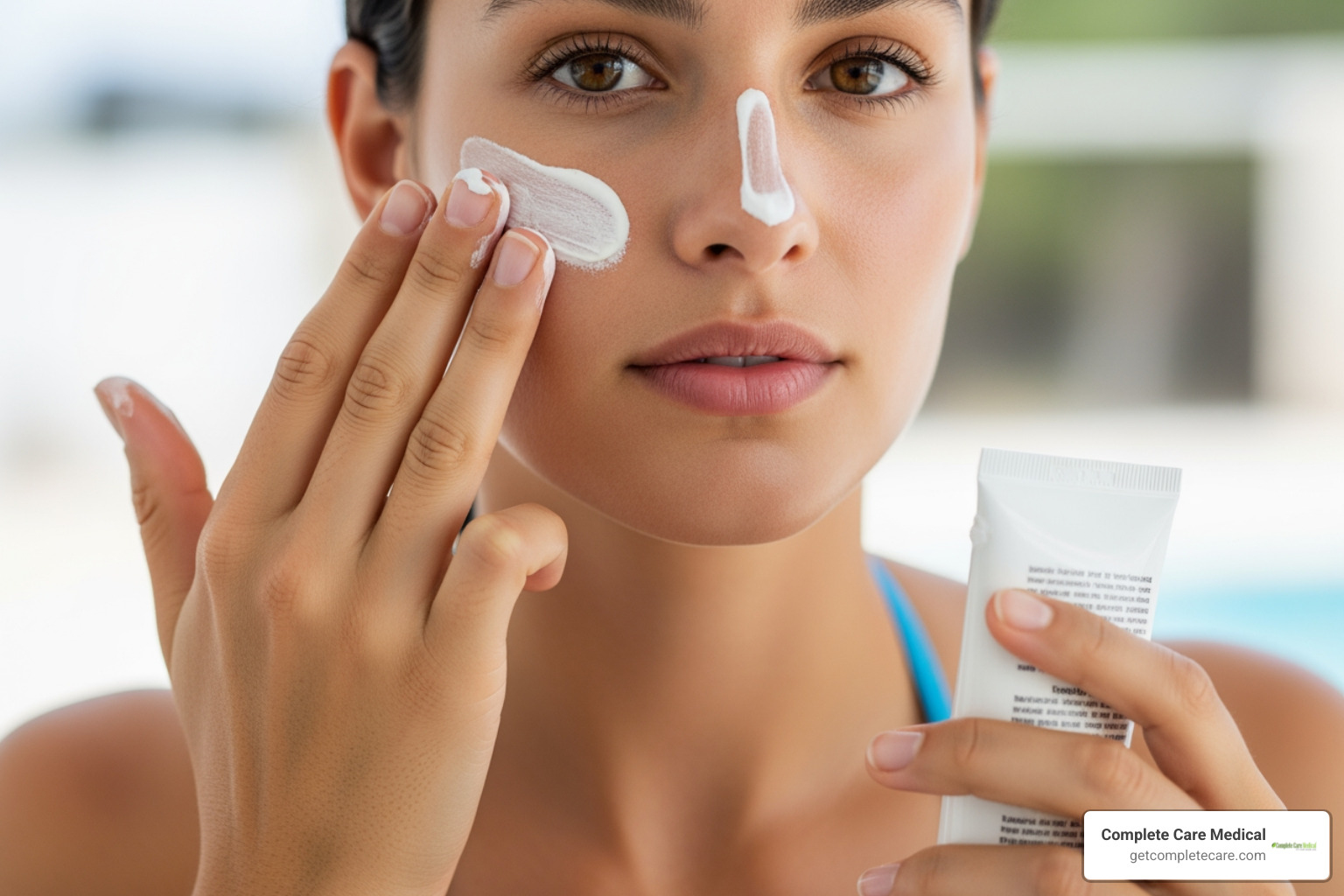
Daily Sun Protection: This is the most critical step. Sun exposure is the primary cause of premature skin aging. Choose a broad-spectrum sunscreen with an SPF of 30 or higher and apply it generously every day, reapplying every two hours when outdoors. Also, seek shade and wear protective clothing. For more detailed guidance, review the FDA's advice on how to help protect your skin from the sun.
Affordable Ingredients and At-Home Care
Once you have the foundational three, you can add affordable active ingredients to target specific concerns.
Hydrators (Glycerin, Ceramides, Hyaluronic Acid): Draw moisture into the skin and strengthen its barrier.
Antioxidants (Vitamin C): Protects from free radical damage, brightens skin, and supports collagen.
Gentle Exfoliants (AHAs/BHAs): Chemical exfoliants like glycolic acid remove dead skin cells. Start once or twice a week.
Retinoids (Over-the-Counter Retinol): Boosts collagen and cell turnover to improve fine lines. Start with a low concentration a few times a week.
When selecting products, focus on ingredients rather than brand hype or price. For more tips, see the American Academy of Dermatology's guide on how to select anti-aging skin care products.
Free Lifestyle Habits for Youthful Skin
Your daily habits have a monumental impact on how your skin ages, and these are often free.
Healthy Diet: Eat antioxidant-rich foods like fruits and vegetables.
Hydration: Drink plenty of water to keep skin plump.
Quitting Smoking: Smoking dramatically accelerates aging.
Quality Sleep: Aim for 7-9 hours per night for skin repair.
Stress Management: Chronic stress harms skin; practice relaxation techniques.
Regular Exercise: Boosts circulation for a healthier complexion.
Smart Skin Health: When to See a Doctor and Final Tips
While we focus on budget-friendly skin care for aging, it's crucial to know when to seek professional medical attention. Differentiating between normal aging and serious conditions can be life-saving.
Is It Just a Wrinkle? A Guide to Healthy Skin Care for Aging
While most age-related skin changes are benign, watch for signs of skin cancer. Check your skin monthly for any new growths, sores that don't heal, or changes in existing moles.
Use the ABCDE rule to spot potential melanomas, the most serious skin cancer. We encourage you to review images to help you recognize the ABCDE features of melanoma:
- Asymmetry: One half doesn't match the other.
- Border: The edges are irregular, ragged, or blurred.
- Color: The color is uneven, with multiple shades.
- Diameter: The spot is larger than a pencil eraser (6mm).
- Evolving: The mole changes in size, shape, color, or starts to bleed or itch.
Consult a doctor for any ABCDE signs, sores that won't heal, or persistent skin issues like severe dryness or itchiness. Conditions like rosacea and psoriasis also require a professional diagnosis and treatment.
Your Long-Term Plan for Skin Care for Aging
The most crucial element of any skincare plan is consistency.
- Be Consistent and Patient: Sticking to your routine daily yields the best results. It can take several weeks or months to see noticeable improvements, especially with ingredients like retinol.
- Know When to See a Pro: If you're struggling with specific concerns despite a consistent routine, consider consulting a dermatologist. They can offer personalized advice and stronger treatments. Your primary care doctor can often provide a referral.
Conclusion: Healthy Aging is Within Reach
Effective skin care doesn't require a hefty investment. By focusing on the foundational three, cleansing, moisturizing, and sun protection, and adopting healthy lifestyle habits, you can significantly impact your skin's health.
Remember to prioritize proven, affordable ingredients and be vigilant about checking your skin for any suspicious changes.
At Complete Care Medical, we're committed to making quality wellness accessible. We're proud to be your partner in healthy aging and believe everyone deserves to feel confident in their skin. For more, explore our insights on innovations in healthcare for aging populations.